Olive oil arrives in everything from clear glass bottles to design-forward tins to refillable olive oil dispensers, and the container is not just packaging. It directly affects how long your extra virgin olive oil stays fresh and how easily it fits into daily cooking. Here is a clear, side-by-side look at every common option, including pour spouts, drip control, refilling, and cleaning, so you can find the best container for olive oil in your kitchen.
In This Article
What Makes a Good Olive Oil Container?
Three qualities matter most, and they all trace back to keeping the olive oil fresh:
- Light protection. Light is olive oil's biggest enemy. Opaque options, including tin, ceramic, and dark glass, protect the olive oil from light far better than clear or transparent glass.
- Air control. An airtight seal and a sensible size limit oxidation and slow rancidity between uses.
- Practicality. The best container is one you will actually use: a clean pour spout, drip-free pouring, easy to clean and refill, and sized so you finish the olive oil while it is fresh.
Tin vs. Glass vs. Ceramic vs. Dispenser
Each olive oil container has a job it does well. This table sums up where each one fits.
| Container type | Best for | Advantages | Cautions |
|---|---|---|---|
| Tin | Everyday cooking, travel, gifting | Blocks light completely; lightweight; difficult to break; great in smaller sizes like 200 ml | Can dent cosmetically; choose a size you will finish fresh |
| Dark glass bottle | The table, drizzling | Filters most light; elegant; a clean pour | Breakable; still passes some light, so keep it in a dark place |
| Clear/transparent glass bottle | Olive oil, you will finish quickly | Shows color; widely available | Least light protection; never store near a window or bright shelf |
| Ceramic cruet | Countertop drizzling | Opaque; attractive; refillable; many are dishwasher-safe | Clean and refill regularly so older olive oil does not linger inside |
| Olive oil dispenser (glass or stainless steel) | Frequent cooks who refill from a larger supply | The pour spout controls the flow of olive oil; drip-free designs keep counters clean; stainless steel is opaque | Glass dispensers are often clear, so store them in a cabinet; clean and refill them so the olive oil inside stays fresh |
| Stainless steel fusti (bulk) | Storing larger quantities | Opaque, airtight, durable; a spigot to dispense olive oil cleanly | Decant into a smaller bottle, tin, or dispenser for daily use |
| Bag-in-box | Bulk olive oil | Opaque; the bag collapses as you pour, limiting air | Built for the pantry, not the table |
Are Olive Oil Dispensers Worth It? Spouts, Drips, and Cleaning
A good olive oil dispenser earns its place on the counter when it does three things: protects the olive oil, pours cleanly, and is easy to clean. The best olive oil dispensers use a pour spout that gives you a controlled flow of olive oil and a drip-free, drizzle-friendly stream, so you get an even drizzle of olive oil without olive oil drips down the side of the bottle. An airtight pour spout, a cork stopper, or a dust cap over the spout also slows oxidation between uses.
Material decides light protection. A stainless steel dispenser or a stainless steel container is opaque and keeps the olive oil fresher; a clear glass dispenser or transparent glass looks lovely but should live in a cabinet, away from light. Whatever the type of olive oil, the same rule holds: opaque protects best.
Cleaning matters more than people expect, because old olive oil left in a dispenser turns rancid and taints the fresh olive oil you add. Look for a design that is easy to clean and refill: a wide intake, a removable spout, dishwasher-safe parts, or a brush to clean the neck. When you refill, do not just top up; clean the dispenser with warm, soapy water, dry it, and then refill so the olive oil inside stays fresh. A funnel makes refilling tidy. The same care applies to a ceramic cruet or olive oil cruet: clean and refill rather than endlessly topping off.
One honest note: a dispenser does not improve the olive oil; it only helps you store and pour it. The taste of the olive oil still comes from the olives and freshness. A dispenser is a convenience for drizzling olive oil and dispensing olive oil cleanly, not a substitute for good olive oil kept well.
So What Is the Best Container for Olive Oil?
For most home cooks, the best container for olive oil is a tin for everyday use, optionally paired with a dark glass bottle, a ceramic cruet, or a stainless steel olive oil dispenser for the table. The tin wins on the two things that matter most: it blocks light completely and survives daily handling, while still pouring cleanly. If you buy a larger size, store the supply in opaque, airtight packaging like stainless steel or a bag-in-box and decant into a smaller everyday container or dispenser. The deciding factor is not tradition; it is protection plus the format you will genuinely use.
What McEvoy Ranch Chose, and Why
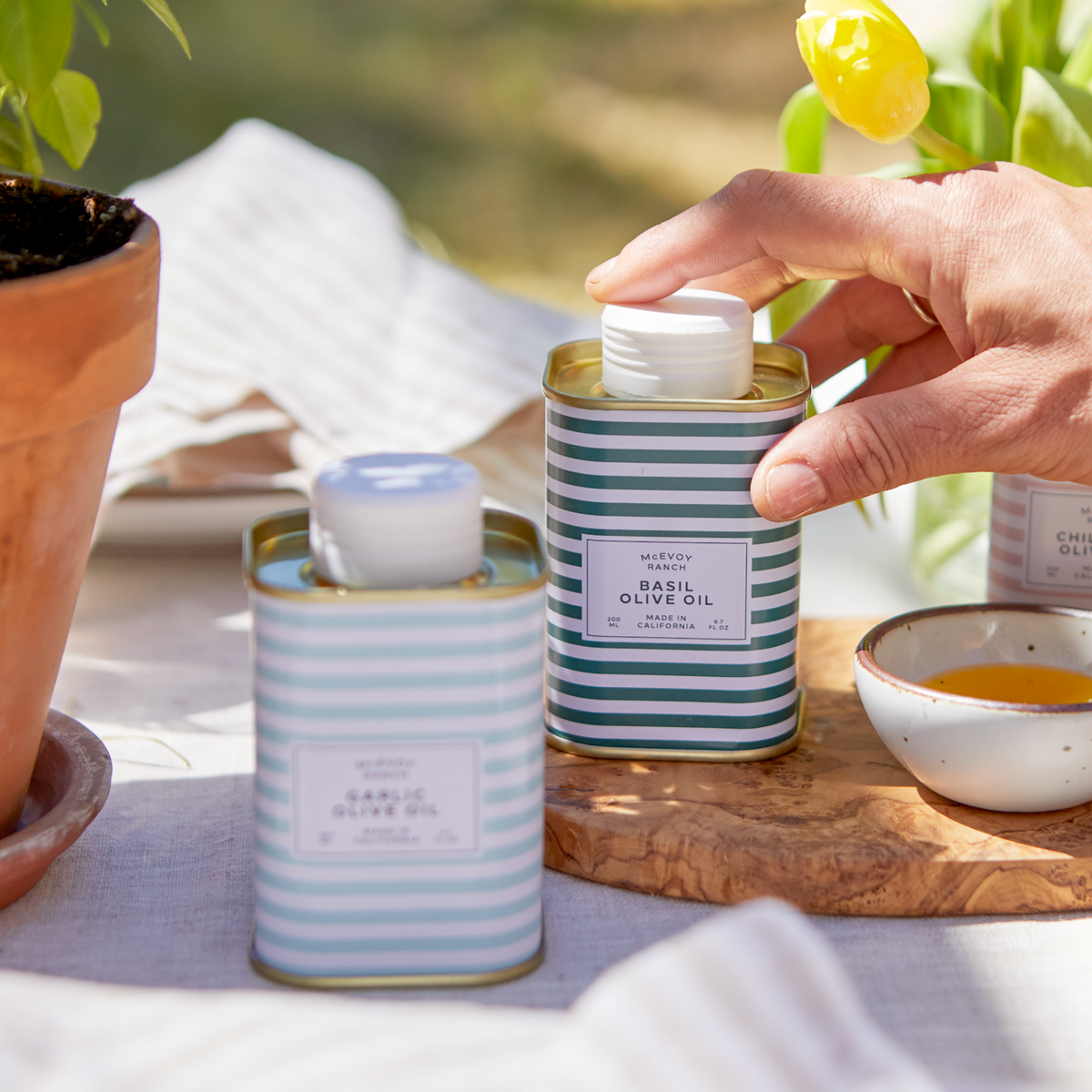
When we designed the Stripes Olive Oil Collection, we chose the tin deliberately. An opaque 200ml tin protects our certified organic, estate-grown extra virgin olive oil from light and air, weighs little, resists breaking, pours cleanly with no drips, and is sized to keep in everyday rotation, from the kitchen counter to outdoor dining and travel. Made at our ranch in Petaluma, California, it is our answer to the best-container question: a genuinely protective olive oil container built to be used rather than saved.

The Stripes Organic Extra Virgin Olive Oil tin pairs an opaque, lightweight container with fresh, estate-grown olive oil, an everyday format that keeps good olive oil protected and within reach.
Shop the Stripes Olive Oil tinPrefer a classic bottle for the table? Our flagship Organic Extra Virgin Olive Oil (EVOO) is a versatile, balanced choice you can decant into a cruet or dispenser for dressing, drizzling, dipping, and everyday cooking.
Frequently Asked Questions
Is a tin or a glass bottle better for olive oil?
A tin generally protects olive oil better because it is completely opaque and difficult to break, which suits everyday use. A dark glass bottle is a good choice for the table; clear glass protects the olive oil the least.
Are olive oil dispensers a good idea?
Yes, if you choose a drip-free pour spout, keep a clear glass dispenser in a cabinet away from light (or pick stainless steel), and clean and refill it regularly so the olive oil inside does not go rancid. A dispenser is great for a controlled drizzle; it does not change the taste of the olive oil.
How do you keep olive oil fresh in a dispenser or cruet?
Keep it opaque or in a dark place, close the spout to limit air, and clean the container with soapy water before each refill. Refill from a protected source rather than topping up old olive oil.
Can you store olive oil in a plastic container?
It is not ideal beyond the short term. Plastic containers can allow some air exposure and are not as protective as tin, glass, ceramic, or stainless steel. Choose an opaque, food-grade olive oil container instead.
What size olive oil should I buy?
Buy a size you will finish within a few weeks to a couple of months of opening. A 200ml, 250 ml, or 500 ml format is easy to rotate; if you cook constantly with olive oil and other cooking oils like avocado oil, buy a larger supply and refill a smaller everyday container.
Key Takeaways
- The best container for olive oil protects it from light and air and fits your routine.
- Tin offers the most complete light protection and is lightweight and durable.
- Dark glass suits the table; a ceramic cruet or stainless steel olive oil dispenser works if you clean and refill it.
- A good dispenser has a drip-free pour spout and dishwasher-safe parts; it pours the olive oil, it does not improve it.
- Clear or transparent glass protects the least, so keep it in a dark place and use it quickly.
- Match the size to how much olive oil you actually use, and decant from bulk.
Protection First, Then Practicality
The best container for olive oil protects the olive oil and fits how you cook. Opaque wins for freshness, and a tin pairs that protection with everyday practicality, which is exactly why more fresh California olive oil now arrives in one.