In This Article
- Why the best gift for a cook is not another kitchen tool
- What makes a good olive oil gift for someone who cooks?
- Match the gift to how they actually cook
- Best olive oil gifts by price
- Should you pair olive oil with vinegar in a gift box?
- What to check on the label before you buy
- Should you give one bottle or a set?
- Gifts for the food lover who already has everything
- How to make an olive oil gift feel personal
- Key takeaways
- Frequently asked questions about olive oil gifts
The best olive oil gift for a food lover is a fresh, well-made extra virgin olive oil that fits the way they already cook. That is the whole trick. Someone who cooks dinner five nights a week wants a bottle large enough to pour freely. Someone who cooks to show off wants a robust, limited edition bottle worth talking about. Someone still finding their taste wants a tasting set, not a lecture. Match the bottle to the cook and an inexpensive gift lands better than an expensive one.
Here is the short version. For a serious everyday cook, give a full-size estate extra virgin olive oil or a gift set built around one. For a curious cook, give a trio or a five-bottle sampler so they can taste the differences side by side. For the person who owns every gadget and needs nothing, give something perishable and excellent: a recent-harvest bottle they will finish in a season. This gift guide sorts the options by cook, by price, and by what to check on the label before you buy.
Why the best gift for a cook is not another kitchen tool
Most gift guides for cooks are equipment lists. Pans, a Dutch oven, a cast iron skillet, another cutting board, a thermometer, a drawer's worth of utensils and silicone spatulas. Those gift ideas are fine, and they are also where the trouble starts: kitchen gear saturates. Anyone who genuinely loves to cook has been given tools for years, has settled on the ones they like, and has a cupboard organized around them. The odds that your pick is better than the one they already reached for this morning are not good.
Ingredients do not saturate, because they get used up. That is the structural advantage food gifts have over cookware, and it is why olive oil keeps showing up in gift guides written by people who actually cook. A great bottle does not compete with anything they own. It slots into every pan they already have, improves the food coming out of all of them, and disappears by spring, which is the point.
There is a second advantage worth naming. Kitchen tools are a matter of preference, and getting someone else's preference wrong is easy: handle weight, nonstick versus cast iron, whether they even want another bowl. A fresh, well-made extra virgin olive oil has no such trap. It is not a bet on how they like to work. It is a better version of something they buy anyway.
What makes a good olive oil gift for someone who cooks?
A good olive oil gift does three things at once. It gets used, it tastes noticeably better than what is already on the counter, and it does not create work for the person receiving it. Olive oil clears all three easily, which is why it has quietly become one of the most reliable gourmet food gifts you can give. There is no arranging, no serving plan, and nothing that has to be eaten by Sunday, which is more than most gift ideas for foodies can say.
The part most cooking gifts miss is that a cook can taste the difference immediately. Fresh extra virgin olive oil is grassy, fruity, and a little peppery at the back of the throat. A tired supermarket bottle is flat. Someone who cooks often has tasted both, even if they never had words for it, so a genuinely fresh bottle registers the first time they dress a salad with it. That is a rare quality in a gift: an upgrade the recipient can perceive on day one, without you having to explain what you spent.
It also helps that olive oil is a working ingredient rather than a decorative one. For most food lovers, the gifts that get remembered are the ones that end up in the daily rotation.
Match the gift to how they actually cook
Most gift guides sort olive oil by occasion. Sorting by cook works better, because the same bottle that delights one person sits unopened for another. The table below is the shortcut we use ourselves when someone asks what to send, whether they are shopping for chefs, for home cooks, or for the friend who hosts every dinner party.
| The cook you are shopping for | What they probably already have | What to give instead | Why it lands |
|---|---|---|---|
| Cooks most weeknights | A large, anonymous bottle bought on price | One full-size estate extra virgin olive oil, or a gift set built around it | Volume matters more than novelty; they will actually finish it |
| Loves to entertain | Plenty of serveware, not much on the table worth tasting alone | A robust, limited edition extra virgin olive oil for the bread plate | It becomes part of the evening rather than an ingredient |
| Still learning their taste | One bottle they are not sure about | A three- or five-bottle tasting set | Comparison teaches faster than any label |
| Bakes more than they cook | Butter, and a vague sense that olive oil is for savory food | A mild, balanced extra virgin olive oil in a smaller format | Olive oil cakes and shortbread convert people quickly |
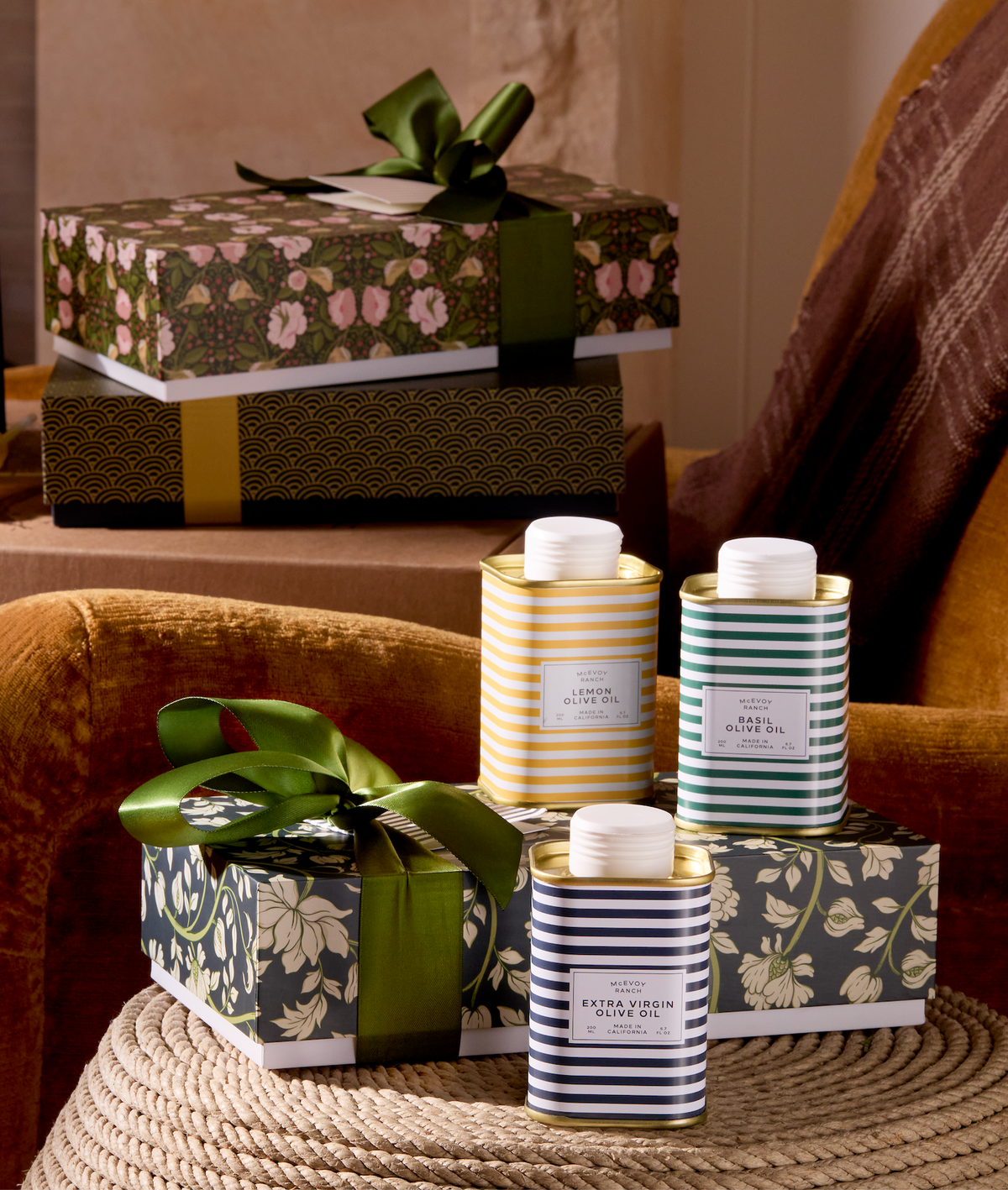
| Cooks in a small kitchen, or travels | Nowhere to put another large bottle | A 200 ML Stripes tin, or two | Shatterproof, portable, and pours cleanly without drips |
| Already owns everything | Every gadget, every pan, no unmet needs | Something perishable and excellent, with a recent harvest date | You cannot own a duplicate of this season's harvest |
Two notes on using this table. First, when you genuinely do not know, the everyday cook column is the safe default: a versatile full-size extra virgin olive oil is the least likely bottle to go unused. Second, resist scaling up. A larger box is not a better gift if half of it is filler the recipient did not want, and food lovers are unusually good at spotting padding.

The Home Chef Gift Set is built for exactly this kind of cook, the one who is in the kitchen most nights and will get through a good bottle without saving it for a special occasion.
Shop the Home Chef Gift SetBest olive oil gifts by price
Price is usually the real constraint, so it is worth knowing what each range buys you. The bands below reflect our own estate olive oil gift sets, and the logic holds fairly well across good producers.
| Price range | What it buys | Best for |
|---|---|---|
| Under $40 | A single full-size estate extra virgin olive oil, a dedicated cooking bottle, a 200 ML tin, or a three-bottle tasting pack | Coworkers, teachers, a thank-you, or a first gift to a new cook |
| $40 to $75 | A five-bottle sampler, a robust limited edition bottle, or a boxed set pairing olive oil with a few pantry items | The main gift for a friend or family member who cooks seriously |
| $75 and up | A larger curated set that pairs estate olive oil with vinegars and other California pantry goods | Family gifts, a shared household present, or a client you want to impress |
The most common mistake is spending the whole budget on box size. If you have $50, one excellent bottle plus a handwritten note about what to do with it beats a bigger assortment of things nobody asked for. Cooks notice quality per item, not item count.
If you want to browse by budget rather than by cook, our olive oil gift sets and packs are grouped roughly along these lines.
Should you pair olive oil with vinegar in a gift box?
Pairing is what turns a bottle into a gourmet gift box without padding it out, and it is the single easiest upgrade to a food gift. Olive oil and vinegar are the two halves of a dressing, so giving both hands the recipient a finished idea rather than an ingredient. For most foodies, that pairing gets used within the week.
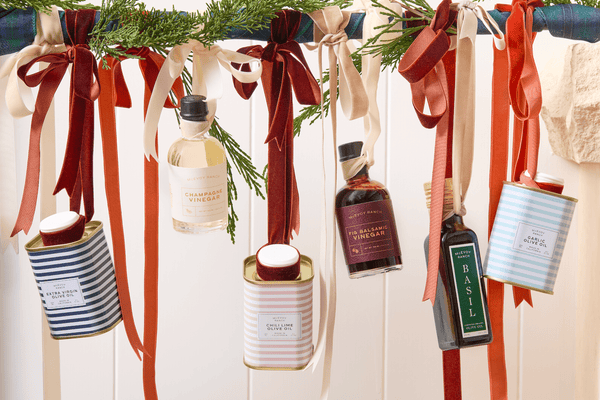
A bright, clean champagne vinegar is the safest partner for a first gift, since it suits green salads, chicken, and quick pickles without dominating anything. A balsamic gives you a different register: sweeter, rounder, and better on roasted vegetables, cheese, or strawberries, which makes it the more interesting choice for confident cooks and food enthusiasts who already have a vinegar they like. Either one alongside a single estate extra virgin olive oil makes a complete, giftable pair for well under the cost of a large gift basket.
One distinction worth knowing when you shop, because the labels rarely explain it. Many flavored olive oils are infused, meaning flavor is added after the olive oil is made. Ours are co-milled, so the olives are milled together with fresh fruit or herbs using the Agrumato Method, which is why a lemon olive oil from us tastes like the whole fruit rather than an essence. Both approaches have their place, but infused olive oils and co-milled ones are not the same product, and for gifting the co-milled bottles tend to taste more like the thing on the label.
What to check on the label before you buy
Buying olive oil as a gift means buying without tasting, so the label has to do the work. Three things are worth looking for, and most of the words on the front of the bottle are not among them.
Look for a harvest date first. Olive oil is a fresh ingredient and it does not improve with age, so the most recent harvest is almost always the better bottle. A producer who prints the harvest date is telling you they are confident about it. Look next for source transparency: where the olives were grown and milled, not just where the olive oil was bottled. Then look for the grade. Extra virgin is a real standard, assessed through both lab testing and trained sensory evaluation, not a marketing flourish. In California, standards from the Olive Oil Commission of California (OOCC) help bring clarity to grade and labeling.
What about "pure" and "cold-pressed"? Both sound like quality signals on a gift, and neither is one. On a label, "pure olive oil" legally means a refined blend, a step down from extra virgin rather than up from it. "Cold-pressed" recalls the hydraulic presses of another era; today's extra virgin olive oil, ours included, is milled and separated by centrifuge under temperature-controlled extraction. If you are choosing a gift by label alone, grade and harvest date tell you far more than either phrase.
If you want the longer version of how to read a bottle you cannot taste first, we wrote a full guide to spotting fake olive oil and choosing authentic extra virgin olive oil.
Should you give one bottle or a set?
Give one bottle when you know what they like, and a set when you do not. That is genuinely most of the decision.
A single full-size bottle is the stronger gift for a confident cook. It says you know how they cook and you are backing one choice, and it gives them enough olive oil to use without rationing. The risk of a single bottle is only that it is forgettable if the bottle is ordinary, which is why freshness and provenance carry the whole gift here.
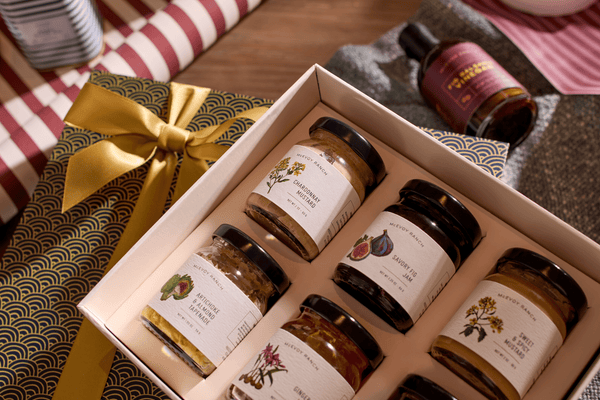
A sampler is the stronger gift for anyone still forming an opinion, and for anyone you know less well. Tasting three bottles next to each other teaches more in ten minutes than a year of buying one bottle at a time, and it removes the pressure on you to guess correctly. An olive oil gift set also handles the awkward middle ground of gifting well: a boxed trio reads as a considered present in a way a single bottle sometimes does not, particularly when it needs to arrive by mail, and it works as a hostess gift where a lone bottle can feel slight.
The one case where a set disappoints is the dedicated everyday cook who is running low. Three small bottles will not get them through the month. When in doubt with a high-volume cook, give the largest good bottle your budget allows.

Our 3-Piece Olive Oil Gift Pack is the set we recommend most often for gifting, because three bottles are enough to compare and learn from without asking anyone to find shelf space for a crate.
Shop the 3-Piece Gift PackGifts for the food lover who already has everything
This is the hard case, and it has a straightforward answer: give something that gets used up. The reason the has-everything cook is difficult to shop for is that durable goods accumulate and they have run out of room. Perishable goods do not have that problem. A bottle of this season's olive oil cannot be a duplicate of last season's, because last season's is gone.
Within that, aim for something they are unlikely to buy for themselves. Most people who cook well still buy their everyday olive oil on price and habit. A robust limited edition bottle from a single estate, or a flavored olive oil co-milled with fresh fruit or herbs using the Agrumato Method, sits just outside the routine purchase and is exactly the sort of thing a good cook enjoys receiving but rarely orders. The same goes for pairing a bottle with an aged balsamic they would not have chosen. This is the reliable move for olive oil lovers and serious foodies: not more, just better, and ideally something they would have felt silly buying for themselves.
If you remember one thing from this guide: give the freshest bottle you can find, in the largest size the budget allows, from a producer who tells you when it was harvested. Freshness, size, and a known source are the three things a cook actually notices, and they matter far more than how elaborate the box is.
How to make an olive oil gift feel personal
An olive oil gift becomes memorable when you tell the recipient what to do with it. A bottle alone is generous. A bottle with one specific suggestion is thoughtful, and it costs nothing.
Name a dish. Write "this is the one for the bread on Christmas Eve," or "try this on roasted potatoes before you use it for anything else," or "dress a plain green salad with it and nothing else, just to see." Cooks appreciate being handed a starting point, and the note is what they will remember about the gift months later, long after they have forgotten the price.
If you are gifting to a household rather than a person, pair the olive oil with something that turns it into an occasion: good bread, a wedge of cheese, a small dish for dipping at the table. And if the gift is arriving by mail, olive oil travels well as long as it is packed upright, which is one more quiet advantage it has over most food gifts.
One last note, since food gifts and wellness language tend to arrive together this time of year. Extra virgin olive oil naturally contains polyphenols and other antioxidant compounds, and those compounds are part of what you taste as bitterness and peppery lift in a fresh bottle. Research has long explored olive oil as part of a Mediterranean-style way of eating, but olive oil is a food, not a treatment for any medical condition, and the reason to give a good bottle is flavor. That is a better pitch anyway.
Key takeaways
- The best olive oil gift matches how the recipient cooks, not the occasion. Volume for the everyday cook, a tasting set for the curious one, something perishable and excellent for the person who has everything.
- Freshness is the difference a cook can actually perceive. Choose the most recent harvest date over almost any other signal on the label.
- Buy one excellent bottle rather than a larger gift basket padded with filler. Cooks judge quality per item, not item count.
- Pairing an extra virgin olive oil with a champagne vinegar or a balsamic turns a bottle into a complete gift box, because together they are a finished dressing rather than a single ingredient.
- Give a single bottle when you know their taste and a set when you do not; sets teach through side-by-side comparison and travel well as presents.
- "Pure" and "cold-pressed" are not quality signals. Grade, harvest date, and a named source are.
- A one-line note naming a dish is what turns a good bottle into a gift someone remembers.
Frequently asked questions about olive oil gifts
What is the best olive oil gift for someone who loves to cook?
For a confident everyday cook, the best olive oil gift is a full-size, recent-harvest estate extra virgin olive oil, ideally in the largest size your budget allows. People who cook often pour freely, so volume and freshness matter more than presentation. If you are less sure of their taste, a three- or five-bottle tasting set is the safer choice because it lets them compare profiles side by side and find what they prefer.
How much should you spend on an olive oil gift?
Under $40 buys a single excellent full-size bottle, a dedicated cooking bottle, or a small tasting pack, which is plenty for a coworker, a teacher, or a thank-you. Between $40 and $75 you can give a five-bottle sampler or a boxed set as a main gift for someone who cooks seriously. Above $100 you are into larger curated sets that pair olive oil with vinegars and other pantry goods. Spending more on one better bottle beats spending the same amount on a bigger box.
Is olive oil a good gift for someone who already has everything?
It is one of the best options, because olive oil gets used up. The difficulty with a well-equipped cook is that durable gifts pile up and duplicate what they own, while a bottle of this season's harvest cannot duplicate anything. Aim for something just outside their routine purchase, such as a robust limited edition bottle or a flavored olive oil made with the Agrumato Method, since most good cooks still buy their everyday olive oil on habit.
What should you look for on the label when buying olive oil as a gift?
Look for a harvest date, a clearly named growing and milling source, and the extra virgin grade. Olive oil is a fresh ingredient that does not improve with age, so the most recent harvest is generally the better bottle, and a producer who prints the date is confident in it. Ignore "pure" and "cold-pressed," which sound premium but tell you nothing useful about quality. It is also worth telling the recipient to open it rather than save it for a special occasion, and to keep it in a cool, dark place away from the stove, since heat, light, oxygen, and time are what dull a good bottle.
Can you send olive oil as a gift by mail?
Yes, and it travels better than most food gifts. Olive oil is not fragile in the way baked goods or fresh produce are, it does not need refrigeration, and it has no delivery-day deadline. Pack bottles upright and well cushioned, or choose a boxed gift set that is already built for shipping. Tins are a good option for long trips because they are shatterproof and lighter than glass.
Featured Products Mentioned in This Guide


Gifts from our California ranch
From striped tins of extra virgin olive oil to curated sets, McEvoy Ranch gifts come straight from our certified organic estate in Petaluma, California.
Shop gifts →