This guide breaks down what separates authentic EVOO from questionable products, how to read a label, what seals and certifications actually matter, and what clues can help you avoid fake olive oil. If you want a practical, brand-aware, consumer-friendly way to buy better oil, this is worth reading.
In this guide:
Why do people worry that olive oil is fake?
The concern exists because not every olive oil on the shelf is what shoppers assume it is. Some bottles are poorly stored, some are old, some rely on vague sourcing, and some are marketed in ways that make low-quality oil sound premium. When people say olive oil is fake, they may mean the product was diluted, mislabeled, stale, or sold as a higher grade than it really deserves.
That is where the idea of real and fake olive oil enters the conversation. In the worst cases, a product may be intentionally altered or adulterated with cheaper oils. In milder cases, the issue is not literal fraud but confusion: a bottle may technically be legal while still falling short of what most people imagine when they buy extra virgin.
For the average consumer, the takeaway is simple: not every attractive bottle is a sign of quality olive oil. Learning the difference between real and fake products is less about paranoia and more about buying with clearer standards.
How can you tell if olive oil is real?
The best answer to how to tell if olive oil is real is to look at several clues together rather than rely on one myth or one internet trick. Start with origin, harvest information, storage, certification, and whether the producer gives you enough detail to trust the bottle. If a product says almost nothing specific, that is already useful information.
A real extra virgin olive oil should taste and smell alive. It may be grassy, fruity, buttery, or peppery, but it should not feel dull, greasy, or lifeless. When a bottle claims premium status without giving a meaningful origin, harvest timing, or quality standard, it becomes harder to identify whether the oil meets the expectations attached to the extra virgin grade.
In other words, the smartest way to decide whether olive oil is real is to combine label reading with sensory judgment. That approach will get you much farther than obsessing over viral hacks about refrigerators or cloudiness.
What should you look for on the label and bottle?
Start with the label. A trustworthy bottle should tell you something real about where the olives came from, who made the oil, and when it was produced. Look for a harvest date, estate or regional sourcing, and a clear explanation of whether the product is a single-origin oil or a blend. A vague description like “packed in Italy” is not the same thing as meaningful traceability.
The bottle itself matters too. Good oil should be protected from heat and light, so darker packaging is usually better. If the oil has been exposed to light in a clear container for a long time, quality can decline before you ever open it. That is why many careful producers choose packaging that is dark or opaque.
When you are comparing bottles, ask whether the producer gives you enough information to distinguish marketing from substance. The best signs are clarity, transparency, and evidence that the quality of olive fruit and storage were taken seriously from grove to shelf.
Which seals, councils, and certifications actually matter?
Seals can help, but only if you know what they mean. The International Olive Council sets widely recognized trade standards, while the California Olive Oil Council—often shortened to COOC—is especially relevant for California-made oils. If you see a COOC seal, it suggests the oil has gone through an additional tasting and testing process tied to California quality standards.
This matters because a certification or certification program can add one more layer of confidence. In California, the olive oil council for California-made oils has become an important reference point for shoppers who want local verification. Some organizations test and certify that an oil meets specific standards, and a clearly certified bottle can give buyers more confidence in the category claim on the front label.
You may also see the longer idea expressed as an oil council for California-made oils, which points to the same general role: independent quality oversight. In Europe, terms like PDO, protected designation of origin, and designation of origin can signal that an oil comes from a specific place and follows recognized production standards. That does not automatically make it better than every other bottle, but it does give the product a more defined designation.
Why do harvest date and freshness matter so much?
Harvest timing matters because olive oil is a fresh product, not something that improves with age in the pantry. A fresher oil is more likely to retain aroma, stability, and complexity, while an older one may flatten out even if it was excellent at the beginning. That is one reason a recent harvest date is often more useful than vague prestige language.
Freshness also helps explain why two bottles labeled “extra virgin” can taste dramatically different. One may feel vivid and balanced, while the other seems tired. The difference is not only about origin; it is also about how recently the oil was made, how it was stored, and whether the producer treated it like a delicate food rather than a shelf-stable commodity.
If you are shopping in the U.S., this point matters even more because olive oil in the u.s often travels long distances and may sit on shelves for extended periods. When possible, choose bottles with clear harvest information and enough transparency to show that the oil still has a real shot at being its best quality.
Can a simple test or olive oil tasting tell you anything useful?
A simple test at home can help, but not in the way social media usually suggests. The best quick check is not putting the bottle in the refrigerator. It is opening it, smelling it, and tasting a small amount. Fresh oil should feel lively and intentional, not waxy, stale, or oddly flat.
This is where olive oil tasting becomes practical rather than precious. You do not need to be a professional taster to notice whether an oil smells fresh, tastes balanced, or leaves a pleasant peppery finish. A good EVOO often has bitterness and a little throat-catching pungency, which are signs of freshness and phenolic content rather than flaws.
That said, tasting alone will not prove legal authenticity. It will, however, help you spot obviously tired or suspicious products. It is one of the fastest ways to see the difference between real and fake expectations and what is actually in your kitchen.
What is the difference between pure olive oil and extra virgin?
This is one of the most important distinctions in any olive oil buyers guide. Pure olive oil vs extra virgin olive oil is not just a matter of branding; it is a difference in grade, flavor, and production method. Extra virgin olive oil is made from mechanically extracted oil that meets sensory and chemical standards without refining.
By contrast, “pure” olive oil usually refers to a more processed product, often a blend of refined oil and some virgin oil. It can still be useful in the kitchen, but it does not offer the same flavor or character as true extra virgin. If your goal is to buy authentic EVOO, the wording matters.
This is also why not every lower-priced bottle marketed as the best olive oil is really the best choice for flavor, finishing, or raw use. If you want a bottle with stronger aroma, more freshness, and clearer standards for extra virgin olive quality, go beyond generic category language.
Does Italian olive oil or California certification make a difference?
It can. A strong Italian bottle with good traceability, recent harvest information, and a regional certification can be excellent. So can a California bottle backed by COOC tasting and testing. The point is not that one place always wins, but that both categories can give you better clues when the producer is specific.
Italian olive oil may carry regional signals like PDO status, while California oils may lean on freshness, estate sourcing, and verification through the California Olive Oil Council. Both can help you avoid counterfeit or badly mislabeled products, though neither should replace common sense about freshness and transparency.
If you prefer domestic sourcing, California can also be a smart place to buy California extra virgin olive oil, especially when you value recent milling, shorter shipping chains, and clearer standards. That can be especially appealing to shoppers looking for organic olive oil California options with more traceable origin.
What belongs in a smart olive oil buyers guide?
A useful olive oil buyers guide should focus on what actually helps a consumer buy better oil: origin, harvest date, packaging, certification, and taste. It should also explain what not to do—namely, assuming every expensive bottle is great or every imported product is suspicious. A smart buyer looks for context, not just price.
You should also think about use. If you want oil for finishing, dipping, and salads, a more expressive bottle may be worth the investment. If you need an everyday cooking oil, you may want something more versatile. The important thing is choosing quality oil that suits the way you cook, rather than defaulting to whatever sits closest to a neutral seed oil in the pantry.
Finally, remember that the best buying guide is one that helps you compare producer detail, not just front-label claims. The more clearly a brand explains where the olives were grown, how the oil was made, and whether the oil meets recognized quality standards, the easier it becomes to buy with confidence.
So how do you buy real extra virgin olive oil with confidence?
The best way to buy real extra virgin olive oil is to ignore hype and look for proof. Choose a bottle with clear origin, a recent harvest date, protective packaging, and meaningful quality signals such as COOC certification or strong producer transparency. Taste also matters: the oil should feel alive, not dull.
If you are trying to avoid fake evoo, remember that the issue is not only fraud in the dramatic sense. It is also age, vague sourcing, weak labeling, and products sold with premium language that outruns their actual quality. The goal is to understand the difference between real and fake quality cues so you are not buying on romance alone.
The simplest answer is this: buy from producers and retailers that give you reasons to trust them. When you do, you are much more likely to end up with a bottle that delivers flavor, freshness, and the genuine health benefits associated with well-made olive oil—rather than a disappointing bottle that makes you wonder whether your olive oil is fake.
Final answer: To spot real extra virgin olive oil, look for clear sourcing, harvest information, protective packaging, trustworthy certification, and fresh taste. The more transparent the producer, the easier it is to buy with confidence.
Key takeaways when buying real extra virgin olive oil
- The best way to judge olive oil is to combine label reading, freshness, and taste.
- Extra virgin is a specific grade, not just a marketing phrase.
- Fake olive oil concerns often involve low quality, poor labeling, or adulterated products.
- Harvest date, dark packaging, and origin transparency matter more than pretty branding.
- COOC, the California Olive Oil Council, and PDO-style systems can provide useful signals.
- Pure olive oil and extra virgin olive oil are not the same thing.
- A real bottle should smell and taste alive, not stale, flat, or lifeless.
- The most trustworthy producers make it easy to understand where their oil came from and how it was made.
No guesswork with McEvoy Ranch
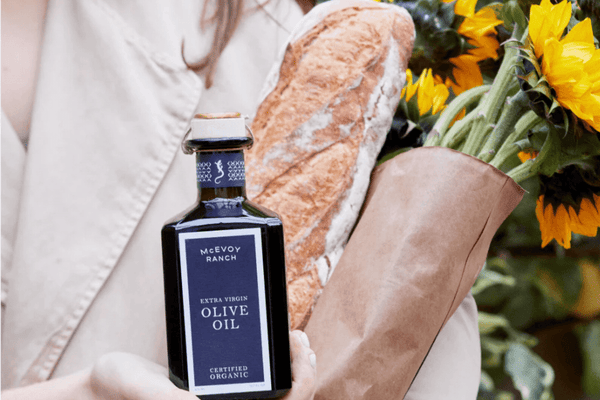
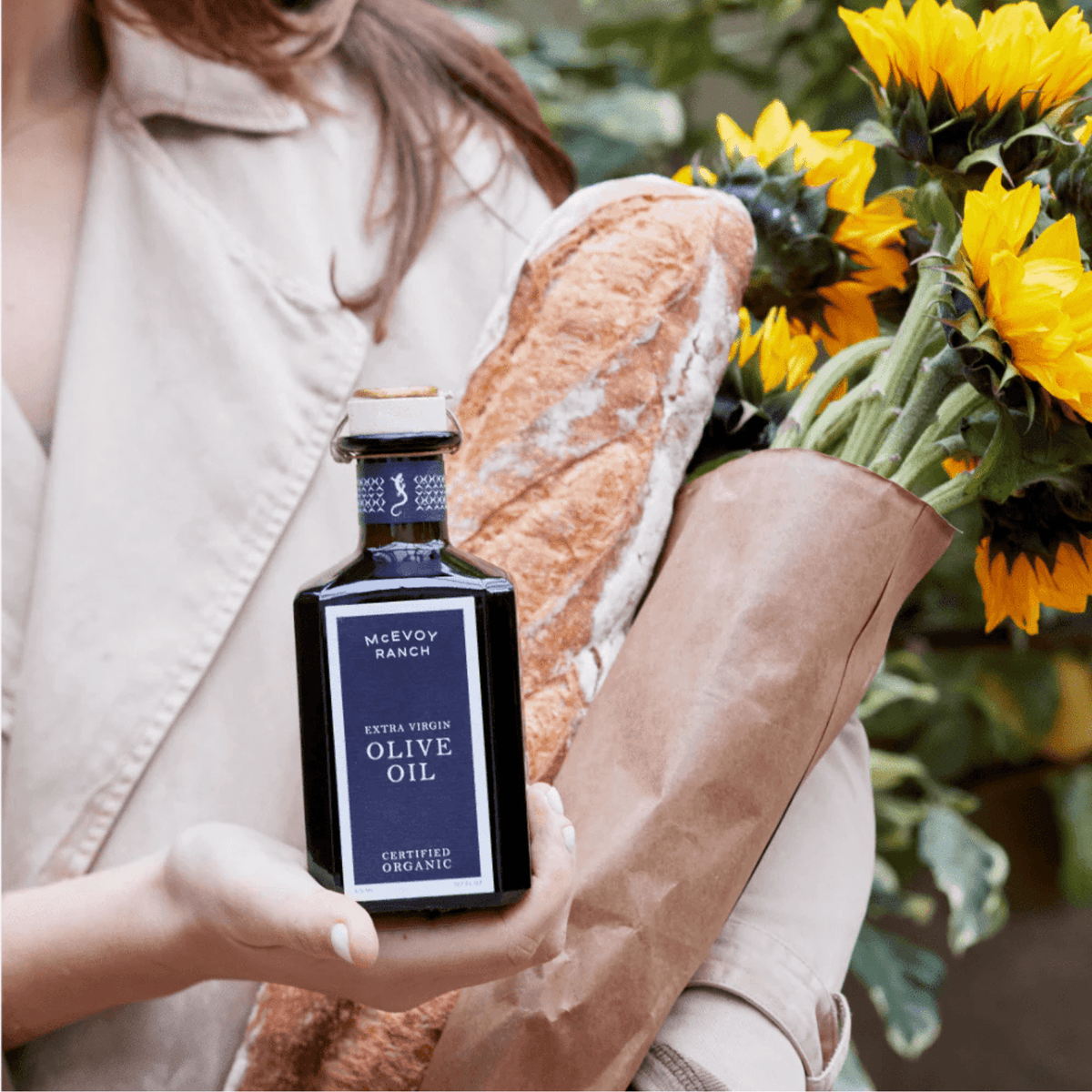
Our extra virgin olive oil is grown and milled on our own certified organic ranch in Petaluma, California, so you always know exactly where it came from.
Shop McEvoy olive oil →