Yes, you can fry with olive oil, including extra virgin. Mediterranean cooks have done it for generations. Fresh, high-quality EVOO handles the heat of everyday frying well, and good olive oils give fried foods a golden crust and a flavor that neutral fats simply do not.
The real question is how. Temperature, pan, batch size, and the bottle you choose make the difference between crisp, clean-tasting food and a greasy, smoky kitchen.
Quick answer: Fry in olive oil at about 325 to 375°F (165 to 190°C) for pan frying and sautéing, and about 350 to 375°F (175 to 190°C) for deep frying. The smoke point of extra virgin olive oil is commonly given as about 375 to 410°F (190 to 210°C), so those ranges leave you room to work. Use a thermometer, cook in small batches, and reach for an everyday cooking bottle when a recipe calls for a lot of olive oil.
Can you fry with olive oil and extra virgin olive oil?
You can fry with both, but they are not the same thing. Extra-virgin olive oil is milled from olives and mechanically extracted, unrefined, so it keeps the fruit, bitterness, and pepper of the olive. Olive oils labeled regular or "light" are mostly refined olive oil with some virgin olive oil blended in, so they taste milder, cost less, and have a higher smoke point. Our guide to how extra virgin olive oil is made covers the difference from tree to bottle.
Both olive oils will fry, but extra virgin olive oils vary in character, from buttery to peppery, and that olive oil flavor carries into the food. A fried egg picks up a grassy, peppery edge. Breaded cutlets brown evenly and taste of olive fruit rather than of the fryer.
You may have heard that you should never cook with olive oil over high heat because olive oil has a lower smoke point than seed oils. In a home kitchen, what matters most is controlling the heat, starting with a fresh bottle, and never letting an empty pan run hot.
How does extra virgin olive oil behave under heat?
The smoke point is the temperature at which an oil begins to break down and produce smoke. It is a useful guide, but it is not the best measure of oxidative stability in an oil, which is how well an olive oil holds up while it is being heated. On that measure, EVOO has higher oxidative stability than most cooking oils, so it holds up well at a high temperature.
That stability comes from its chemical composition. Extra virgin olive oils are mostly monounsaturated fat, chiefly oleic acid (its main fatty acid), and they naturally contain polyphenols, tocopherols (vitamin E), and other antioxidant compounds. Together they help the olive oil stay stable at frying temperatures and hold on to its flavor. Many seed oils are higher in polyunsaturated fats, which break down faster under heat. Some of those antioxidant compounds also transfer to the food during frying, along with the olive oil's flavor.
Refined olive oils have a higher smoke point, but extra virgin carries the polyphenols and the flavor, and early harvest olive oils tend to carry the most. Pushed very hard, extra virgin starts to smoke sooner than refined oils, and prolonged overheating can reduce its antioxidant content. Long, hard heating will change the chemical composition of any cooking fat, so keep the heat moderate and it keeps both its stability and its flavor. Olive oil is a food, not a treatment for any medical condition; here we are talking about cooking, not health.
What temperature should you fry with olive oil?
- Sautéing and pan frying: about 325 to 375°F (165 to 190°C), or medium to medium-high heat on most stoves.
- Shallow frying and deep frying: about 350 to 375°F (175 to 190°C).
- Smoke point of olive oil: about 375 to 410°F (190 to 210°C) for quality extra virgin; refined olive oils sit higher.
The ideal temperature for most frying is around 350°F (175°C). That is hot enough to set a crust quickly, so the food takes up less olive oil, and comfortably below the point where the pan starts to smoke. If you see smoke, turn the burner down and give the pan a minute.
How do sautéing, pan frying, shallow frying, deep frying and searing differ?
Sautéing
A thin film of olive oil, a hot pan, and small pieces kept moving: onions, garlic, greens, mushrooms, shrimp. Sautéed vegetables are the most forgiving place to start if you are new to heating olive oil.
Pan frying
Roughly 1/8 to 1/4 inch of olive oil in a skillet, with larger pieces that cook mostly on one side before you turn them: chicken thighs, fish fillets, pork chops, crispy potatoes. Leave the food alone until it releases easily.
Shallow frying
About 1/2 inch of olive oil, enough to come halfway up the food. Use it for breaded cutlets, fritters, falafel, and eggplant slices, flipping once. It gives you most of the crunch with a fraction of the olive oil.
Deep frying
When a recipe calls for "a large amount of oil," it means enough olive oil to submerge the food, usually 2 to 3 inches in a heavy pot, with at least 3 inches of clearance above the surface so nothing bubbles over. Think French fries, calamari, or doughnuts. Clip a deep-fry thermometer to the side and hold the temperature steady.
Searing
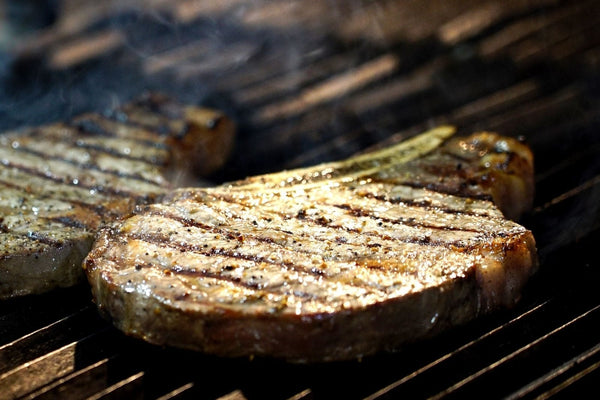
To sear a steak or scallops, you want a very hot pan and a thin coat of olive oil for a short time. Heat the pan first, add the olive oil just before the food, and pat the food dry so it browns rather than steams.
How can you tell when the olive oil is ready?
A thermometer is most reliable. Without one, use these cues:
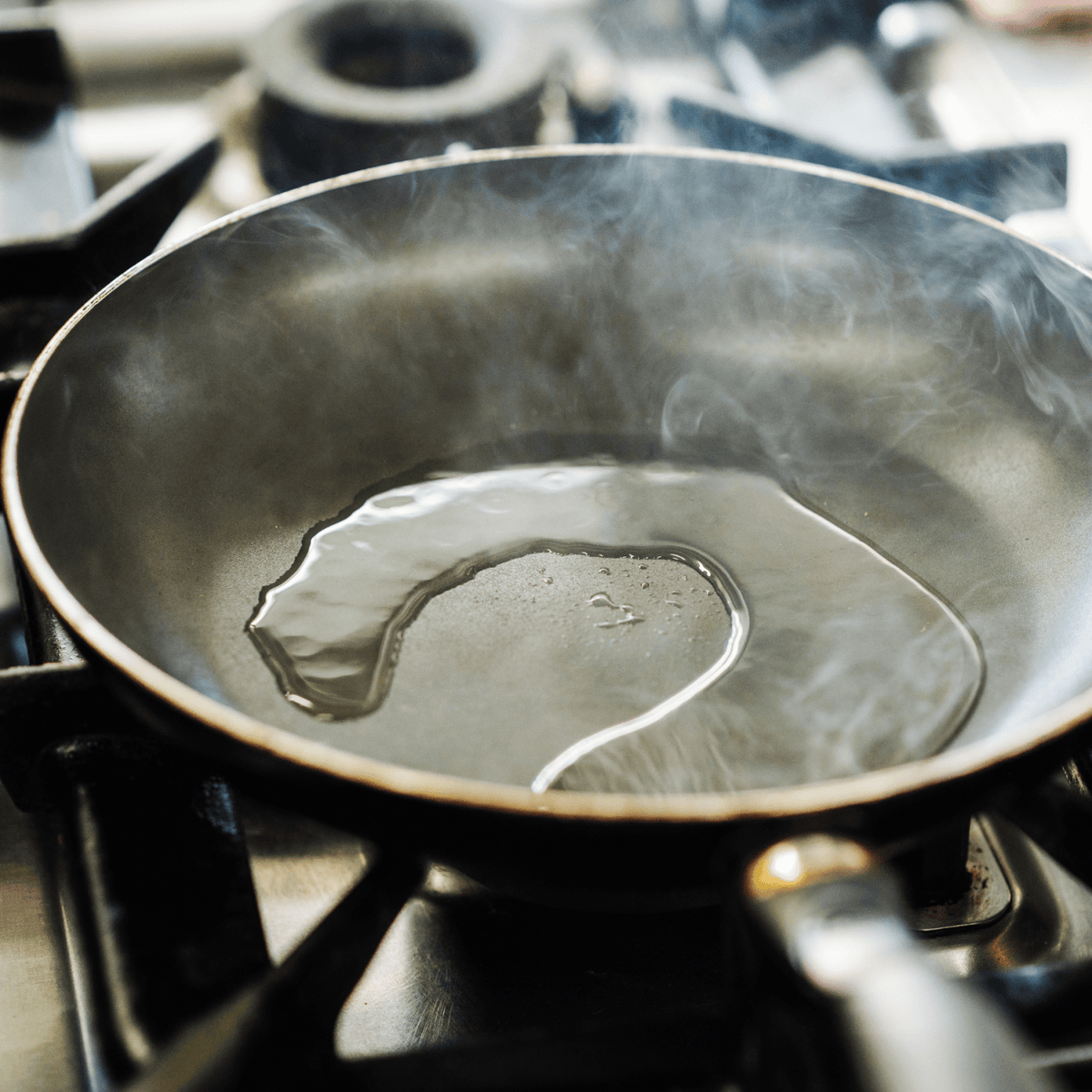
- The shimmer: the surface looks rippled and moves easily when you tilt the pan. That is about right for sautéing.
- The bread test: drop in a small cube of bread. If it sizzles steadily and turns golden in about a minute, you are ready to fry something. If it browns in seconds, the pan is too hot.
- The wooden spoon test: dip the handle of a wooden spoon into the pan. A steady stream of small bubbles means the olive oil is ready.
How much should you fry at once?
Crowding the pan is the most common frying mistake. Every piece of cold food lowers the temperature, and a pan that drops much below 325°F (165°C) starts to soak rather than crisp.
- Fry in small batches, leaving space between pieces.
- Let the olive oil come back up to temperature between batches.
- Pat food dry. Water makes olive oil spatter and cools the pan.
- Use a heavy pan: cast iron, carbon steel, or thick stainless steel, or a Dutch oven for deeper batches.
- Drain on a rack set over a sheet pan rather than on paper towels so the underside stays crisp, and salt while hot.
Can you strain and reuse olive oil after frying?
Yes. Let it cool completely, then strain it through a fine-mesh sieve lined with cheesecloth or a coffee filter. Store it in a clean, covered jar in a cool, dark place, labeled with what you fried.
Reused olive oil carries flavor from the last batch, so keep fish separate from vegetables. Retire it when it darkens, foams, smokes early, or smells stale. Heat, light, and air all speed oxidation, and olive oils that go rancid make anything you cook taste tired.
Which olive oils for frying work best?
Match the bottle to the job. For frying that takes more than a few tablespoons, we reach for our Cooking Extra Virgin Olive Oil. Of our olive oils, it is the one made for the heat of the kitchen: soft, mild, and fresh, with notes of green apple that support fried food rather than compete with it. Half-gallon and gallon sizes make a full pot practical.
Save our flagship Organic Extra Virgin Olive Oil for when its flavor is part of the dish: a quick sauté of spring vegetables, fried eggs, or a drizzle over fried food straight from the pan. Its aromatic, grassy nose and peppery finish are worth tasting.
Two olive oils cover most kitchens: an everyday cooking bottle for heat and a finishing bottle for the table. Flavored olive oils, like our Organic Lemon Olive Oil, belong at the finish rather than in the fryer. You can compare olive oils in our olive oil collection.
How does olive oil compare with canola, vegetable, sunflower and avocado oil?
Here is how olive oils compare with other cooking oils on flavor and cooking behavior:
- Extra virgin: a distinct flavor; good olive oils range from mild to peppery. Browns food beautifully and is ideal for frying most savory dishes. Costs more per quart, which is why a larger cooking bottle helps.
- Canola oil and vegetable oil: a neutral oil, inexpensive in volume, which is why restaurants use them in the fryer. They add little flavor.
- Sunflower oil: another neutral seed oil with a light taste that behaves much like canola in the pan.
- Avocado: mild and slightly buttery, with a high smoke point. Usually priced above seed oils, with less character than good olive oils.
- Regular olive oil: refined olive oils with mild flavor and a higher smoke point. Regular olive oil is a good middle ground when you want little olive character.
So which is the best oil for frying? Olive oil is the best choice when you want the fat to be part of the flavor: Mediterranean dishes, vegetables, fish, eggs, potatoes, anything you would happily drizzle with olive oil at the table. When you want a completely neutral background, as in some pastries, a neutral cooking oil such as sunflower may suit the recipe better. That is a question of taste, not a rule.
Wondering whether frying with EVOO is good or bad for you? We cover that separately in Is Frying with Extra Virgin Olive Oil Bad for You?
Frequently asked questions
Can you deep fry with extra virgin olive oil?
Yes. Use a heavy pot and a thermometer, and hold the heat steady. Mild cooking olive oils in larger sizes make the most sense, and you can strain and reuse them.
Does olive oil have a low smoke point?
Not as low as its reputation suggests. For fresh, quality extra virgin olive oils it is commonly given as about 375 to 410°F (190 to 210°C), above most home frying temperatures.
Can you fry eggs in olive oil?
Yes. Heat a few tablespoons over medium heat until it shimmers, add the egg, and baste the white until it sets with crisp, lacy edges.
Is olive oil good for pan frying chicken or fish?
Yes. Pat the pieces dry, heat about 1/4 inch of olive oil, and do not move them until they release on their own.
Why does my olive oil smoke when I fry?
The pan is too hot, it was heated empty, or the olive oil is old. Lower the heat and store olive oils in a cool, dark place.
How many times can you reuse olive oil for frying?
Often once or twice. Strain it after each use and discard it once it smells rancid or smokes early.
The short version
Frying with good olive oils is practical and delicious. Keep the heat in range, fry in small batches in a heavy pan, and match the bottle to the task: a cooking bottle for volume and heat, a finishing bottle where you want to taste the olive. Start with our Cooking Extra Virgin Olive Oil and see what it does for your next batch of potatoes.