Is Frying with Extra Virgin Olive Oil Bad for You?
The short answer: frying with extra virgin olive oil (EVOO) is a long-standing kitchen tradition, not a mistake. The old warning that you should never heat good olive oil is mostly a myth. What matters at the stove is simpler than the debate suggests: keep the pan below the smoke point, start with fresh olive oil, and retire it once it looks or smells tired.
At McEvoy Ranch, we grow and mill our extra virgin olive oil on our 550-acre estate in Petaluma, California, and we cook with it every day, frying included. We are growers and cooks, not dietitians, so we will leave nutrition questions to your doctor. What we can share is how to fry with olive oil well.
Key Takeaways
-
Extra virgin olive oil has a smoke point of about 380 to 410°F (195 to 210°C).
-
EVOO remains stable at high temperatures during cooking.
-
EVOO naturally contains polyphenols and other antioxidant compounds that help it resist oxidation in the pan.
-
Most pan frying and sautéing happens around 325 to 375°F (165 to 190°C); deep frying around 350 to 375°F (175 to 190°C).
-
Fresh, harvest-dated olive oil behaves better in the pan than an old bottle.
-
If olive oil smokes, darkens, or smells off, stop and start over.
Why Do People Say Frying with Olive Oil Is Bad?
The worry usually comes from two places: a belief that extra virgin olive oil (EVOO) has a low smoke point, and a sense that heating a good bottle wastes it. Plenty of marketing leans on the "health benefits" of olive oil. We would rather tell you how it behaves in a hot pan.
The myth that cooking with olive oil is unwise does not hold up in the kitchen. Cooks across the Mediterranean have fried vegetables, fish, and potatoes in olive oil for generations. The real risks are the same as with any fat: too much heat, olive oil that is past its prime, and careless handling around a hot pan.
Extra virgin olive oil naturally contains antioxidants such as polyphenols and vitamin E, which also shape its fruity, peppery flavor. That flavor is the real reason to fry with it.
What Is the Smoke Point of Extra Virgin Olive Oil for Frying?
Cooking with extra virgin olive oil works because of its smoke point, which the North American Olive Oil Association, an industry trade group, puts at380°F (195°C) to 410°F (195 to 210°C). That sits above the typical frying range of 350°F (175°C) to 370°F (175 to 190°C), so a fresh bottle handles everyday frying comfortably as long as you control the heat.
Smoke point matters, but it is not the whole story. Freshness, how the olive oil was stored, and how long it sits over a high flame all affect how it behaves in the pan.
|
Cooking Method |
Typical Temperature |
What to Watch |
|
Sautéing |
325 to 375°F (165 to 190°C) |
Shimmering surface, no smoke |
|
Pan frying |
325 to 375°F (165 to 190°C) |
Steady sizzle, food browning evenly |
|
Deep frying |
350 to 375°F (175 to 190°C) |
Thermometer reading between batches |
How Does Temperature Change Each Cooking Technique?
-
Pan frying: a heavy skillet holds steady heat, so cutlets and fritters crisp without the olive oil climbing toward its smoke point.
-
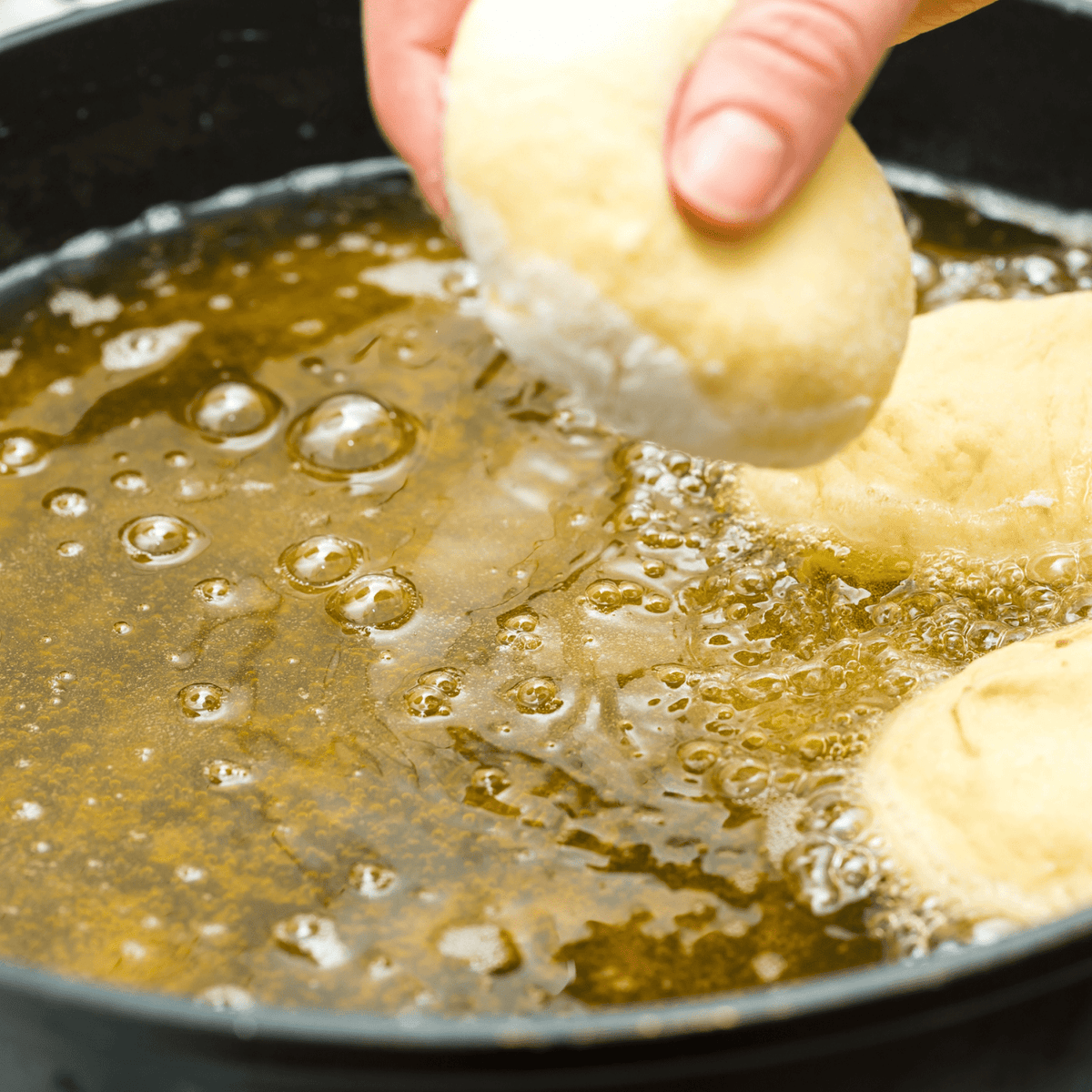
Deep frying: use a deep, heavy pot and a clip-on thermometer, and fry in small batches so the temperature does not crash.
-
Sautéing: quick, lively heat for vegetables, shrimp, or garlic. Pull the pan off the burner if the olive oil starts to smoke.
When using EVOO, or any oil, keep an eye on the frying temperature to avoid overheating.
For a full walkthrough of technique, from pan choice to batch size, see our guide:Can You Fry with Extra Virgin Olive Oil? Here's What You Need to Know.
What Happens to Extra Virgin Olive Oil When You Fry with It?
EVOO's monounsaturated fats and polyphenols make it stable at frying temperatures, which limits the breakdown products that can form in less stable cooking oils.
Which Compounds Form During Frying?
The type of oil you fry in affects which compounds form in the pan. Olive oil produces lower levels of compounds like heterocyclic amines (HAs), polycyclic aromatic hydrocarbons (PAHs), and advanced glycation end-products (AGEs) than other vegetable oils.
|
Compound |
Olive Oil |
Other Vegetable Oils |
|
HAs |
Low |
High |
|
PAHs |
Very Low |
Moderate |
|
AGEs |
Low |
High |
Does Freshness Matter When You Fry with Olive Oil?
Yes. Olive oil is a fresh ingredient, and heat, light, oxygen, and time all affect quality. A bottle that has sat open by the stove for a year will not taste or behave like one from a recent harvest.
-
Look for a harvest date on the label, not just a best-by date.
-
Store olive oil in a cool, dark place, away from the stove.
-
Taste it before you cook. Fresh olive oil smells green and clean; a flat, waxy, or crayon-like smell means it is past its prime.
For frying, we reach for ourExtra Virgin Cooking Olive Oil, a practical, estate-grown bottle meant for everyday heat. Save a more robust bottle for drizzling over the finished dish.
Common Myths About Frying with Olive Oil
A few misconceptions keep home cooks from using olive oil for frying. Here is how they look from the kitchen.
-
The Low Smoke Point Myth
Many people assume extra virgin olive oil has a low smoke point and belongs only in salad dressing. EVOO's smoke point is actually between 380°F (195°C) and 410°F (195 to 210°C), which is higher than the usual frying temperatures. The practical rule is simple: if it smokes, the pan is too hot.
-
Formation of Compounds During Frying
Some believe frying breaks olive oil down into unwanted compounds. But research showsEVOO is very resistant to oxidation because of its antioxidants. This means it is unlikely to form oxidation products during cooking, unlike other cooking oils that break down more readily when exposed to heat.
-
Frying Wastes Good Olive Oil
Neutral fats such as sunflower oil or canola oil add little flavor. Olive oil brings its own, and frying vegetables, potatoes, or eggs in it gives a savory, lightly fruity edge you can taste. That is not waste; it is seasoning.
-
Food Fried in Olive Oil Comes Out Greasy
Greasy results usually mean the olive oil was too cool or the pan was crowded. Heat to the right temperature, fry in small batches, and drain on a rack. Food comes out crisp regardless of which fat you use.
How Do You Fry Safely with Extra Virgin Olive Oil?
Hot fat deserves respect in any kitchen. These habits keep frying with extra virgin olive oil safe and keep the olive oil in good condition.
Avoiding Overheating
-
Keep deep frying between 350 and 375°F (175 to 190°C), and use a thermometer to check.
-
If the olive oil smokes or starts to burn, turn off the heat and let it cool.
-
Pat food dry and fill the pot no more than halfway to limit spatter.
-
Keep a lid within reach, never leave the pan unattended, and never use water on a grease fire.
When Should You Stop Reusing Olive Oil?
Skim out food bits after each batch. If you strain and keep olive oil for another round of frying, retire it once it has darkened, thickened, foams, or smells off. When in doubt, start with a fresh pour.
Final Thoughts
Frying with extra virgin olive oil is not the kitchen mistake it is sometimes made out to be. Choose a fresh, harvest-dated bottle, keep the temperature below the smoke point, and let go of olive oil once it looks or smells tired. Those are good frying habits with any oil, and they let the flavor of the olive oil come through in the recipe.
FAQ
Is frying with extra virgin olive oil bad for your health?
We are olive growers, not medical professionals, so we will not make health claims either way. In the kitchen, frying with extra virgin olive oil works well when you stay below the smoke point, use fresh olive oil, and do not reuse olive oil that has darkened or smells off.
What is the smoke point of extra virgin olive oil for frying?
EVOO's smoke point is between 380°F (195°C) and 410°F (195 to 210°C), depending on its quality and free fatty acid level. Pan frying and sautéing usually happen around 325 to 375°F (165 to 190°C), and deep frying around 350 to 375°F (175 to 190°C).
Can you reuse olive oil after frying?
You can strain it and use it once more for similar foods, but retire it as soon as it darkens, smells off, or starts to smoke at normal frying temperatures.
Which olive oil should I use for frying?
Choose a fresh, harvest-dated extra virgin olive oil meant for everyday cooking, such as ourExtra Virgin Cooking Olive Oil, and keep a more robust bottle for finishing.