In This Article
- What are the main types of olive oil?
- How is extra virgin olive oil different from virgin and refined?
- Which olive oil is best for dipping?
- Which olive oil is best for cooking?
- Which olive oil is best for finishing?
- Which olive oil makes the best gift?
- How many types of olive oil do you actually need at home?
- Key takeaways
- Frequently asked questions about types of olive oil
The different types of olive oil come down to one thing: how the olive oil is made, and how much of the olives' flavor survives the process. Extra virgin olive oil is the least processed and the most flavorful. Virgin olive oil sits just below it. Refined styles, often labeled simply "olive oil" or "classic," are milder because the flavor has been stripped back. Flavored olive oils are a separate category made for finishing and gifting. Once you know which is which, matching a bottle to a job becomes easy.
Here is the short version. For dipping, finishing, and everyday cooking, a fresh extra virgin olive oil does most of the work. For high-heat frying where you want little olive flavor, a refined style is fine. For gifts, a flavored trio or a tasting set turns olive oil into something worth unwrapping. The sections below explain each type and the use it suits best.
What are the main types of olive oil?
Olive oil is graded by how it is made and by how it tastes and tests in the lab. Extra virgin olive oil is milled from fresh olives and separated by centrifuge, extracted without refining, and it has to meet both chemical and sensory standards. That combination is what keeps its lively, fruity character intact. The other grades step down from there, either because the olive oil carries minor sensory faults or because it has been refined into something more neutral.
The table below sorts the common types of olive oil by how they are made, how they taste, and the use each one suits. Grade is also the fastest shortcut to a quality olive oil: the words on the label tell you how the bottle was made before you ever taste it. It is worth remembering that most home cooks really only reach for two of these: a good extra virgin olive oil, and perhaps a flavored bottle for finishing.
| Type of olive oil | How it is made | Flavor | Best use |
|---|---|---|---|
| Extra virgin olive oil | Milled and centrifuged from fresh olives, extracted without refining; meets chemical and sensory standards | Fruity, grassy, peppery, lively | Dipping, finishing, dressing, and most everyday cooking |
| Virgin olive oil | Same mechanical extraction, but with slightly higher acidity or minor sensory faults | Milder and less vivid | Everyday cooking where a gentler flavor is fine |
| Refined olive oil (often labeled "olive oil" or "classic") | Refined olive oil with a little virgin olive oil blended back for taste | Neutral and faint | Higher-heat cooking and frying where you want little olive character |
| Olive pomace olive oil | Extracted from the olive pulp left after milling, then refined | Very neutral | Budget high-heat and commercial cooking |
| "Light" olive oil | Refined for a light color and mild taste; the name refers to flavor, not calories | Very mild | Baking or cooking where you want almost no olive flavor |
| Flavored olive oil (lemon, herb, citrus) | Co-milled with fresh fruit or herbs using the Agrumato Method | Bright and aromatic | Finishing, dressing, and gifting |
One label worth decoding is "light" olive oil (sometimes "extra light"). It sounds like a diet choice, but it is simply a refined style chosen for a pale color and faint taste. It has the same fat and calories as any other olive oil. If you see it and expected extra virgin character, that is the mismatch to watch for.
Why "pure olive oil" is not in this table: It is deliberately missing. "Pure olive oil" reads like a grade above extra virgin, but on a label it legally means a refined blend, essentially the same product as "olive oil" or "classic." The same goes for "cold-pressed": it recalls the hydraulic presses of another era, while today's extra virgin olive oil, ours included, is milled and separated by centrifuge at controlled temperatures. Neither phrase tells you how good a bottle is. Grade and harvest date do.
How is extra virgin olive oil different from virgin and refined?
The difference is flavor and how the olive oil is judged. Extra virgin olive oil is the top grade because it is extracted without refining and has to be free of sensory defects, with positive notes like fruitiness, bitterness, and pungency. Quality is assessed through both lab testing and trained sensory evaluation, which is why extra virgin is more than a marketing term. In California, standards from the Olive Oil Commission of California (OOCC) help bring clarity to grade and labeling.
Virgin olive oil comes from the same mechanical extraction but may show slightly higher acidity or small sensory faults, so it tastes a little quieter. Refined styles are different in kind: the olive oil has been processed to strip away flavor and aroma, then a little virgin olive oil is usually blended back for taste. That is why a bottle labeled plainly "olive oil" tastes so much milder than a fresh extra virgin bottle. None of these are milled any differently in spirit, but only extra virgin keeps its full character on the plate.
That character is not only about taste. The bitterness and peppery finish in a fresh extra virgin olive oil come in part from the naturally occurring polyphenols and other antioxidant compounds in the olives, which is one reason a lively bottle feels so different from a flat one. Plenty of marketing leans hard on the "health benefits of olive oil"; we would rather tell you how a bottle was made and when it was harvested. Olive oil is a food, not a treatment for any medical condition, so the reason to choose extra virgin is flavor, freshness, and versatility rather than any health promise.
Which olive oil is best for dipping?
For dipping bread at the table, you want an extra virgin olive oil with presence. This is the one moment where the olive oil is tasted almost on its own, so freshness and character matter most. A bottle with grassy, fruity, and peppery notes turns a plate of bread into something worth lingering over, while a tired or neutral bottle simply disappears.
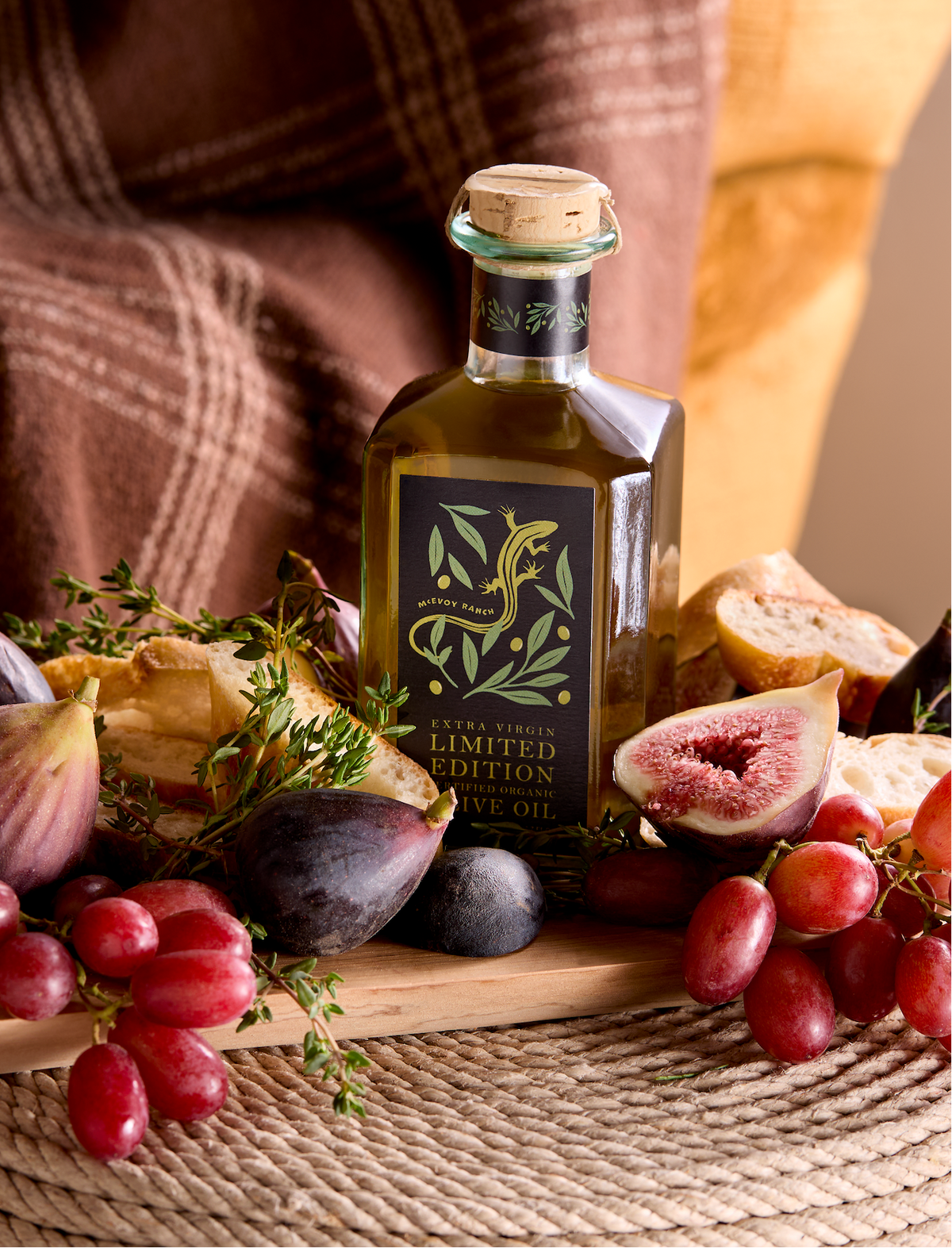
Our flagship estate extra virgin olive oil is a natural fit here because it is balanced and versatile enough to dip, dress, and cook, yet flavorful enough to stand on its own with warm bread. If you love a more assertive pour, a robust, limited edition bottle brings extra pepper and depth to the dipping plate. Skip refined and "light" styles for dipping entirely; with nothing to hide behind, their lack of flavor shows immediately.
Which olive oil is best for cooking?
For everyday cooking, an extra virgin olive oil is a genuinely versatile choice. It works well for sautéing, roasting, and many pan-cooking tasks, and a good bottle can move from pan to plate. Smoke point matters, but it is not the whole story; temperature control and how you cook matter just as much as a single number, so it helps to choose your olive oil by use case and freshness rather than by one specification.
If you cook constantly and want a dedicated kitchen bottle, an extra virgin cooking olive oil is gentle enough for delicate work yet sturdy enough for roasting and sheet-pan dinners. When you are frying at high heat and want no olive flavor in the finished dish, a refined or "light" style is a reasonable pick, since its neutrality is exactly the point; in that neutral role it competes with canola oil or vegetable oil more than with a fresh extra virgin. For reference, a well-made extra virgin olive oil typically smokes around 350 to 410 degrees Fahrenheit, while refined styles sit closer to 465 degrees Fahrenheit, and most home cooking with olive oil happens below those ranges. For most weeknight cooking, a fresh extra virgin bottle is all you need.
Which olive oil is best for finishing?
Finishing is where flavor gets to shine, so this is the place for your most expressive bottles. A finishing olive oil is drizzled raw over beans, grilled vegetables, fish, soup, or a finished salad, which means the bottle is tasted directly. A robust extra virgin olive oil with a peppery lift is wonderful here, and a limited edition bottle with more character earns its place when the olive oil is meant to be noticed.
This is also where flavored olive oils do their best work. A lemon olive oil brightens seafood, vegetables, and spring salads, while an herb-driven bottle adds savory lift to roasted vegetables, potatoes, and chicken. Made using the Agrumato Method, these are co-milled with fresh fruit or herbs, so they read as aromatic finishing accents rather than all-purpose cooking bottles. Use them with restraint, as a final touch rather than a base.
If you only keep one type of olive oil at home, make it a fresh extra virgin olive oil. It can dip, dress, finish, and handle most everyday cooking, which is why it is the bottle we reach for most.
Which olive oil makes the best gift?
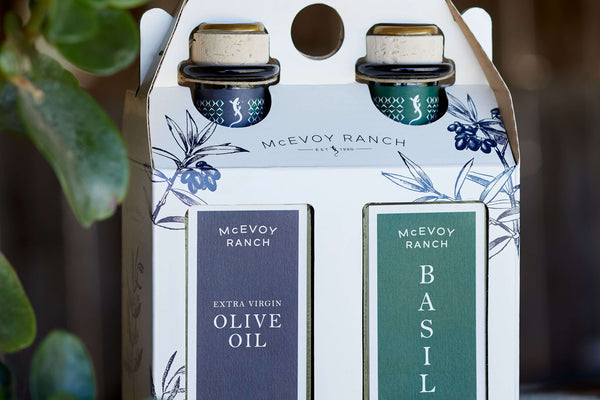
Olive oil is a generous gift because it is both useful and a small luxury, and the types that gift best are usually the ones that invite discovery. A curated trio or tasting set lets someone compare different profiles side by side, which is a friendly way to learn what they like. A three-piece gift pack of estate olive oils is an easy, giftable starting point that works for a host, a new cook, or anyone curious about flavor.
Flavored olive oils also shine as gifts because their bright character feels special without needing explanation. A lemon or herb bottle makes a thoughtful hostess gift on its own or tucked into a larger basket. When you want something more elevated, a set built around estate extra virgin olive oil with a couple of specialty bottles gives the recipient one versatile everyday bottle plus a little room to explore.
How many types of olive oil do you actually need at home?
Far fewer than the shelf suggests. For most kitchens, one fresh extra virgin olive oil covers dipping, dressing, finishing, and the majority of everyday cooking. It is the single most versatile type of olive oil, and buying a good one you use often beats owning five bottles that slowly go stale. Olive oil is a fresh ingredient, so the bottle you reach for daily will almost always taste better than one saved for special occasions.
From there, add only what your cooking actually calls for. If you fry at high heat and want no olive flavor, keep an inexpensive refined bottle for that job alone. If you love bright, finished dishes, add one flavored olive oil for finishing. Two well-chosen bottles, a versatile extra virgin and one specialty option, handle far more than most people expect.
Key takeaways
- The main types of olive oil are extra virgin, virgin, refined styles labeled "olive oil" or "classic," olive pomace, "light," and flavored olive oils; the grade reflects how the olive oil is made and how much flavor survives.
- Extra virgin olive oil is the least processed and most flavorful, judged by both chemical and sensory standards, and it is the best all-around choice for dipping, finishing, dressing, and everyday cooking.
- "Light" olive oil refers to a mild flavor and pale color, not fewer calories; it is a refined style, not a lighter one.
- For finishing, reach for a robust extra virgin or a flavored olive oil made with the Agrumato Method, and use it as a final accent rather than a base.
- For gifting, a trio or tasting set invites discovery, while a flavored bottle makes an easy standalone present.
- Most home cooks only need one versatile extra virgin olive oil, plus at most one specialty bottle for specific jobs.
Frequently asked questions about types of olive oil
What is the difference between extra virgin and regular olive oil?
Extra virgin olive oil is milled and extracted without refining and has to meet both chemical and sensory standards, so it keeps its full fruity, peppery character. Bottles labeled plainly "olive oil" or "classic" are refined styles with the flavor mostly stripped away and a little virgin olive oil blended back for taste. Extra virgin tastes far more vivid, which is why it is the better choice whenever the olive oil is tasted directly.
Which type of olive oil is best for high-heat cooking?
A fresh extra virgin olive oil handles most everyday sautéing and roasting well, and smoke point is only part of the story since temperature control matters too. When you are frying at high heat and want no olive flavor in the dish, a refined or "light" olive oil is a reasonable pick because its neutrality is the whole point. For flavor-forward cooking, keep the extra virgin bottle in play.
What is the best olive oil for dipping?
The best olive oil for dipping is a fresh extra virgin olive oil with real character, since it is tasted almost on its own with bread. Look for grassy, fruity, and peppery notes and a recent harvest date. A robust or limited edition extra virgin bottle is especially good on a dipping plate, while refined and "light" styles have too little flavor to carry the moment.
Do I need more than one type of olive oil at home?
Usually not. One versatile extra virgin olive oil covers dipping, dressing, finishing, and most cooking, so a single good bottle you use often is enough for many kitchens. If you fry at high heat or love bright finished dishes, you might add a refined bottle for frying or one flavored olive oil for finishing, but two bottles are plenty for most people.
What type of olive oil makes a good gift?
Flavored olive oils and curated sets make the best gifts because they invite discovery and feel special without needing explanation. A trio or tasting set lets the recipient compare profiles side by side, and a single lemon or herb bottle works well as a hostess gift. Building a gift around a versatile extra virgin olive oil plus a specialty bottle gives someone both an everyday bottle and a little room to explore.
Featured Products Mentioned in This Guide


California olive oil, from our ranch to your table
McEvoy Ranch is a certified organic estate in Petaluma, California, growing and milling its own extra virgin olive oil.
Shop California olive oil