This guide explains what to look for in olive oils for dipping, why freshness matters so much, and how to tell whether a bottle is better suited to cooking or to finishing. We will also cover how to serve a bread dip well, when to drizzle olive oil rather than cook with it, and why California olive oil is often such a smart choice for the table.
In this guide:
What makes a great olive oil dip for bread?
A good bread dip starts with the olive oil itself. If the olive oil tastes dull, waxy, or anonymous, nothing around it will rescue the experience. The best olive oil for dipping has enough flavor to stand on its own, with balanced fruitiness, some bitterness, and a peppery finish that keeps the palate awake. That is why extra virgin olive oil is usually the right place to begin. It is the least processed style and the one most likely to preserve the olive’s actual character.
Texture matters too. A strong dipping olive oil should feel silky and generous rather than heavy. Bread softens the intensity a little, so olive oils that seem slightly peppery or grassy on their own often become beautifully balanced with a crusty piece of bread. This is one reason the best olive oils for dipping are not always the mildest olive oils on the shelf. A little personality helps.
That personality can show up in different ways. One bottle may feel fruity and buttery, another more herb-driven and peppery, another more robust and grassy. The right olive oil depends on the mood of the table, but the common thread is that the bottle should taste alive enough to make dipping bread feel intentional rather than automatic.
Why does freshness matter so much for dipping bread?
Freshness matters in every olive oil article, but it matters especially here. Bread and olive oil is one of the most stripped-down ways to taste a bottle. There is no sauce, no pasta, no long ingredient list to hide behind. If the olive oil is stale, old, or flat, you will notice it immediately.
A fresh bottle tends to offer grassy aroma, a clean olive flavor, and the kind of peppery notes that make a dip feel lively. A tired bottle loses that energy. It may still be usable in cooking, but it will not feel like the best olive oil for bread dipping. This is why harvest date matters so much. A recent harvest is often one of the clearest signs that the olive oil still has structure and freshness worth putting on the table.
Storage matters too. Heat, light, oxygen, and time all shorten shelf life and reduce flavor. If you want your dipping olive oil to stay ready to serve, store it well and use fresh bottles while they still taste vivid. The best table olive oils are not meant to linger half-forgotten in the pantry.

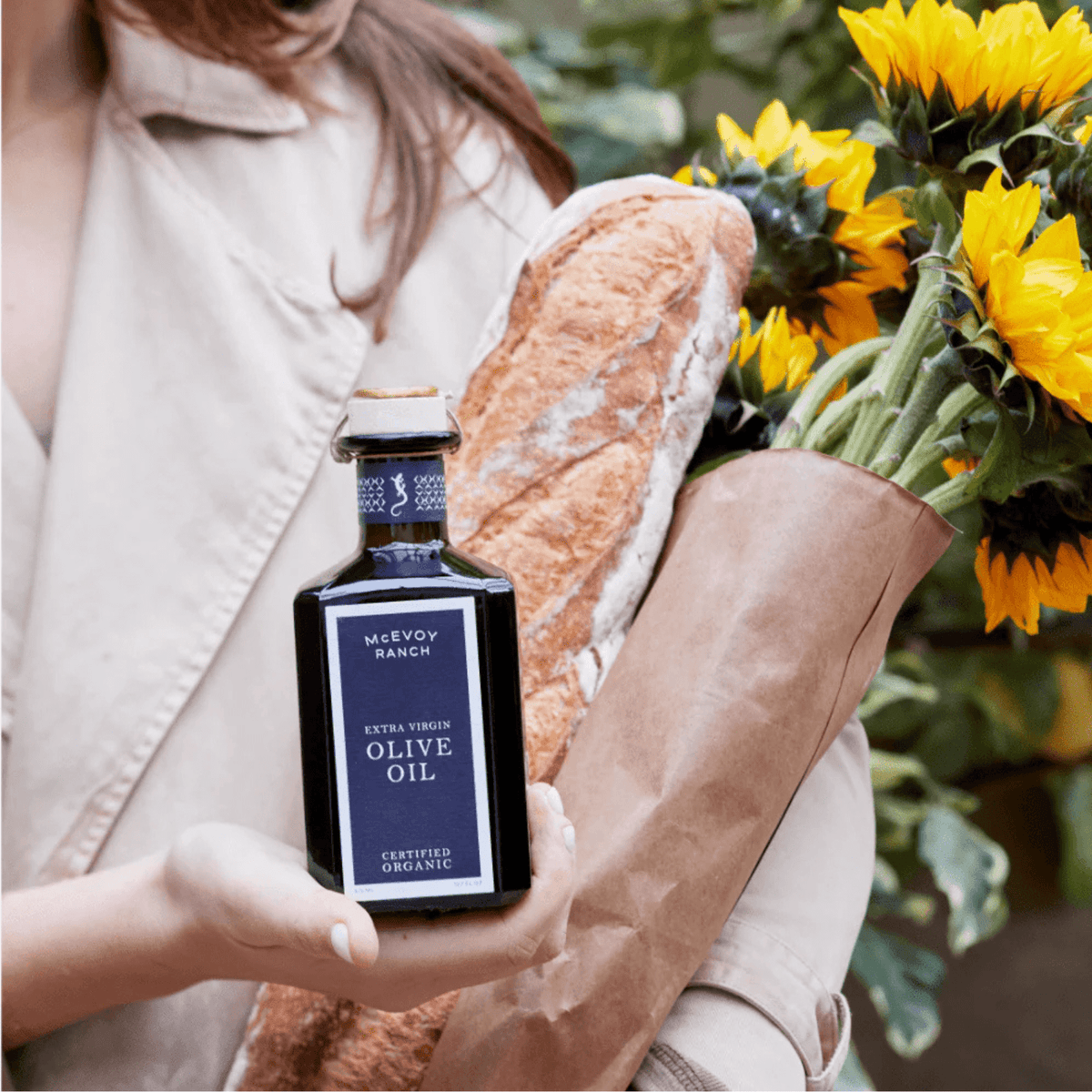
Organic Extra Virgin Olive Oil, a balanced California-grown bottle with grassy freshness and a clean finish, ideal when you want olive oil for bread dipping that can also move easily through the rest of the meal.
Shop Organic Extra Virgin Olive OilHow is olive oil for dipping bread different from cooking olive oil?
The main difference is exposure. Cooking olive oil can disappear into the background, especially under heat. Dipping olive oil sits at the center of attention. It is tasted directly, often in a small bowl with bread and little else, which means both its strengths and weaknesses are easier to detect.
This is why a practical cooking bottle and the best finishing olive oil are not always the same thing. A cooking olive oil should be steady, versatile, and ready to use for many everyday tasks. A finishing olive oil should bring more aroma, more texture, and more noticeable flavor. When you drizzle olive oil over soup, beans, vegetables, or a bread dip, you want the bottle to contribute something specific.
That does not mean one bottle can never do both. A very good extra virgin olive oil can absolutely handle dipping, dressing, and light cooking. But if the question is what makes the best olive oil for dipping, the answer usually leans toward freshness, character, and table presence rather than pure utility.
What flavor profile works best on the table?
There is no single best olive style for every table, but certain traits show up again and again in bottles people love for dipping. A little fruitiness helps. So do herbaceous notes, some richness, and a finish that feels peppery without turning harsh. A slightly peppery bottle can be especially good with warm bread because the bread rounds the edges and lets the flavor open gradually.
Some people prefer a buttery Arbequina-style bottle, while others want something more robust and grassy. Neither is automatically better. It depends on what else is being served and whether you want the olive oil to whisper or announce itself. A more assertive olive oil can be wonderful with beans, roasted vegetables, or salty cheeses, while a softer olive oil may complement a lighter opening course more gracefully.
If you want a simple rule, choose an olive oil with tasting notes you can actually imagine on food. Herbaceous, fruity, grassy, and peppery are all promising. Flat, bland, or merely smooth without character usually means the olive oil will not do much once it reaches the plate.

Organic Limited Edition Extra Virgin Olive Oil, a stronger finishing olive oil with more peppery flavor and depth when you want a bottle that stands out on the bread plate.
Shop Limited Edition EVOOWhat makes the best finishing olive oil?
A finishing olive oil should feel complete without heat. It should have aroma when poured, structure on the palate, and enough flavor to change a dish with a small drizzle. That is true whether you are finishing grilled vegetables, spooning olive oil over beans, or setting out bread and olive oil before dinner.
The best finishing olive oil tends to show more identity than a generic pantry bottle. It may be more peppery, more grassy, or more vivid in its olive flavor. It may even feel a little spicy at the end, which is often a sign of freshness rather than a flaw. These are the olive oils that turn a simple small bowl of olive oil into something worth paying attention to.
For bread-dipping service, finishing olive oil matters because the table is the stage. If the olive oil tastes alive, the whole experience feels more generous. If it does not, even the best bread cannot do much to compensate.
Why is California olive oil such a strong choice?
California olive oil is often a strong choice for dipping because the better producers tend to offer more clarity around harvest, sourcing, and freshness. That makes it easier to choose the right olive oil for the table. If you care about a bottle tasting lively, that information matters.
A well-made Californian or California-grown bottle can also feel especially at home in the kind of food many people serve now: grilled bread, vegetables, beans, fish, salads, and simple seasonal dishes. California olive oil tends to pair naturally with that style of eating because it often feels fresh, direct, and ingredient-driven rather than overly heavy.
This is not to say every imported bottle is lesser, nor that places like Greece or Portugal cannot produce beautiful olive oils. They can. But when you want traceability and a fresh, award-winning bottle that is easy to evaluate, California is often a very smart place to look.
Should you serve the olive oil plain or build a bread dip around it?
If the olive oil is excellent, start plain. Pour a small bowl, add nothing, and taste it first with bread. That is the easiest way to understand whether the bottle really has enough flavor and richness to carry the experience on its own. A cup of olive oil is unnecessary, but a modest pour in a shallow dish lets the aroma open properly.
After that, a few additions can work well if they complement rather than overwhelm. A little black pepper, a pinch of salt and pepper, freshly grated parmesan cheese, or a touch of grated garlic can be pleasant. Fresh herbs like basil, parsley, or oregano can add lift, and a small clove of fresh garlic rubbed into the bowl can deepen the aroma. If you like a more assertive dip, a few pepper flakes can bring heat. For a more elaborate bread dip, some people add 1 tablespoon of freshly grated parmesan, 2 tbsp of chopped fresh herbs, or a small spoonful of balsamic vinegar, though the olive oil should remain the focus.
The point is to support the bottle, not mask it. If the olive oil disappears under garlic, parmesan, balsamic, and herb paste, it probably was not the right olive oil for bread dipping in the first place.

Organic Lemon Olive Oil, a bright infused olive option to use as a second bottle when you want a citrusy finishing olive oil that can complement seafood, vegetables, or a lighter table spread.
Shop Organic Lemon Olive OilDo infused olive oils belong in bread-dipping service?
Sometimes they do, but usually as a second option rather than the main event. A classic estate extra virgin olive oil should remain the baseline because it shows the bottle’s quality most clearly. Still, an infused olive or flavored olive oil can be a lovely variation when it suits the meal.
Citrus and herb olive oils tend to work best. A bottle that uses fresh herbs or citrus to infuse the olive oil can bring brightness and aromatic lift to the table. That might mean basil with tomatoes, rosemary with beans, or a lemon olive oil with seafood and spring vegetables. Used well, they feel flavorful and ready to use without replacing standard EVOO altogether.
This is one place where broad search language can get a little noisy. You may see references to brands like Graza, Cobram Estate, Cobram Estate extra virgin olive, California Olive Ranch, or Colavita when people compare the best olive oil for dipping. Those comparisons can be useful for context, but the real question is not which brand name sounds familiar. It is whether the bottle tastes fresh, balanced, herby or fruity in the right way, and appropriate for the table in front of you.
How do you choose the right olive oil for the table?
Start with freshness, then decide how much personality you want. If you want one bottle that can handle dipping bread, drizzling vegetables, and finishing a bowl of pasta, choose a balanced EVOO with a recent harvest date and clear sourcing. If you want something bolder, choose a more peppery bottle with deeper tasting notes and more distinct olive character.
Then think about the meal. A softer, tasty olive oil may suit a casual glass of wine and warm bread, while a more robust bottle may feel better with salty cheeses, grilled vegetables, or richer dishes. If you are serving multiple olive oils, choose one classic bottle and one flavored or slightly peppery option so guests can compare the difference.
The best olive oil for dipping bread is not defined by hype or by who makes the best olive according to the internet. It is the bottle that tastes fresh, balanced, and alive in a small bowl on your table. Choose that, and the rest takes care of itself.
Key takeaways
- The best olive oil for bread dipping should taste lively, balanced, and complete on its own.
- Freshness matters enormously because bread and olive oil expose the bottle clearly.
- Extra virgin olive oil is usually the strongest choice because it preserves more flavor and character.
- A finishing olive oil should bring aroma, richness, and peppery notes with only a small drizzle.
- California olive oil is often a smart choice because harvest and sourcing are easier to evaluate.
- Garlic, parmesan, fresh herbs, and even a little balsamic can support a dip, but they should never overwhelm the olive oil.
- Specialty or infused olive oils work best as a second bottle rather than the default starting point.
If you want bread-dipping to feel as good as it should, use fresh olive oil, good bread, and a bottle with enough flavor to carry the moment. The best ones make the table feel complete almost immediately.
Featured Products Mentioned in This Guide
These McEvoy bottles work especially well for dipping, drizzling, and finishing at the table.