In This Article
- Why Does the Olive Oil Container Matter?
- Olive Oil Tin vs. Glass Bottle: What Changes?
- Is Dark Glass Better Than Clear Glass?
- What About Ceramic Cruets, Dispensers, or Bag in Box?
- Why Do Tins Encourage Everyday Olive Oil Use?
- How Should You Store Olive Oil?
- Do Sizes Like 500ml, 750ml, 1L, 3L, or 5L Matter?
- What Should the Label Tell You?
- What Is the Best Container for Olive Oil?
- Frequently Asked Questions
Olive oil is not a forever pantry item. It is a fresh ingredient, closer in spirit to juice from fruit than to a shelf-stable condiment that improves with age. Its flavor is shaped by olive variety, harvest timing, milling, storage, and how quickly it is used once opened. A good container cannot make ordinary olive oil exceptional, but it can help preserve the vividness already there: green aroma, a peppery finish, the clean impression of artichoke or fresh grass, and sometimes that pleasant catch at the back of the throat that signals phenolic compounds.
For years, premium olive oil has often been treated like something to save. It arrives in handsome packaging, gets placed toward the back of the pantry, and waits for a special salad or a loaf of good bread. But olive oil is at its best when it is part of daily cooking: poured into a skillet for sautéing, whisked into salad dressing, spooned into a marinade, used to fry bread, or drizzled over vegetables while they are still warm.
The right olive oil container should do two things at once: protect the olive oil from light, heat, air, and time, and make it easy enough to use before its freshness fades.
Why Does the Olive Oil Container Matter?
Extra virgin olive oil is sensitive to oxygen, light, heat, and time. Exposure to those elements gradually changes aroma and flavor. Over time, an olive oil that once tasted fragrant, green, and alive can become flat, waxy, or rancid. That is true whether the olive oil comes from California, southern Italy, Sicily, Greece, Crete, or any other serious olive-growing region.
This is why olive oil storage advice is so consistent: keep it cool, keep it dark, close it well, and use it while it still tastes fresh. The container plays a supporting role in that routine. Dark glass, ceramic, and tins all offer more protection from light than clear glass. A tin also has the advantage of being lightweight and less breakable, which makes it especially appealing for everyday kitchen use.
At McEvoy Ranch, we think about olive oil as both an agricultural product and a working ingredient. Our estate-grown olive oils begin with olive trees on the ranch, where fruit, harvest timing, milling, and careful extraction choices shape the olive oil long before it reaches the kitchen. Packaging cannot replace that work, but it can respect it.
Olive Oil Tin vs. Glass Bottle: What Changes?
An olive oil tin and a glass bottle can both be excellent choices when they are well made and used properly. The useful question is not whether one format is always better. It is what each format does well.
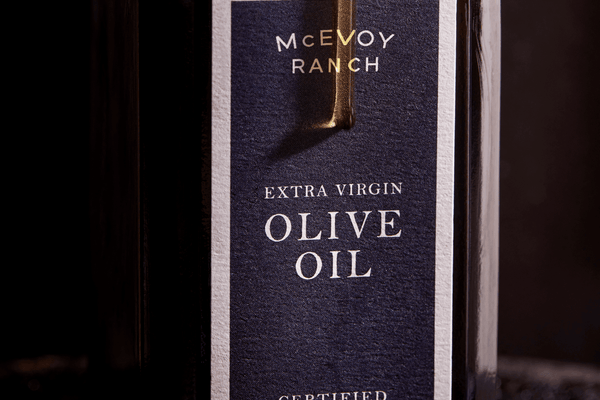
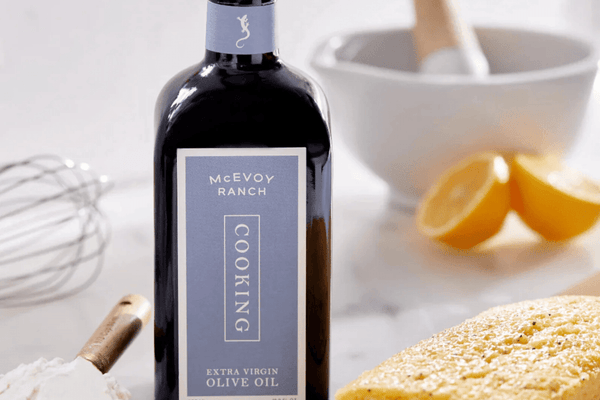
A glass bottle has a familiar elegance. It lets an olive oil producer present color and clarity, and dark glass can help protect the olive oil from light exposure. A bottle is also easy to pour and familiar on the table. The drawback is practical: glass can break, and clear glass is less protective when it sits in bright conditions.
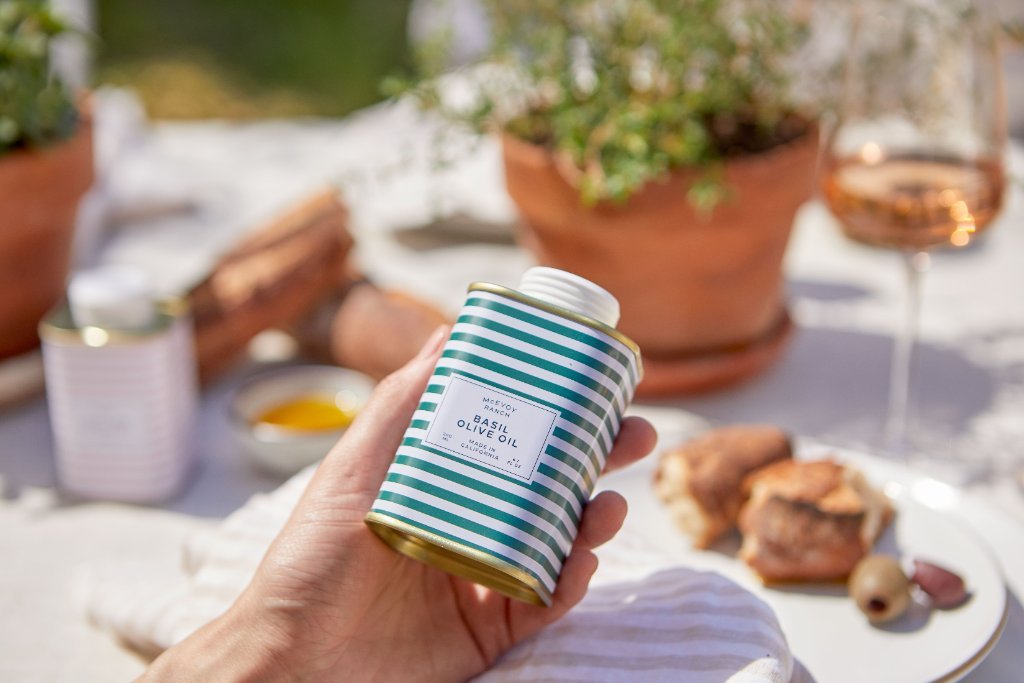
A tin gives the olive oil an opaque shell. Tin packaging helps reduce light exposure and is generally lighter and less fragile than glass. A well-designed olive oil tin can feel more relaxed in the pantry, on a prep table, or beside the ingredients you use most often. It can also dent, which is worth noting, but a dent is usually a cosmetic issue unless it compromises the seal.
Is Dark Glass Better Than Clear Glass for Olive Oil?
Dark glass is usually a better choice than clear glass when the bottle may be exposed to light. It helps reduce light-related quality loss while still offering the familiar bottle format. Clear glass can be attractive, but it asks more of the shopper and the store: the olive oil needs to be protected from bright shelves, sunny windows, and long display times.
That does not mean every olive oil in dark glass is excellent or every olive oil in clear glass is poor. Packaging is one signal, not the entire story. The source, harvest date, handling, and honesty of the producer matter just as much. A California extra virgin olive oil in protective packaging with clear harvest information gives the buyer more confidence than a vague bottle with little detail.
What About Ceramic Cruets, Dispensers, or Bag in Box?
Ceramic cruets and other opaque dispensers can be useful at the table or near a prep station, especially when they pour cleanly and close well. The caution is that refillable dispensers need to be cleaned, and they should not become a place where old olive oil lingers beneath new olive oil. If you use one, refill it in small amounts from a larger container and keep the main container stored properly.
Bag in box packaging can also make sense for larger quantities because it limits air exposure as the oil is dispensed. It is common in some food-service and bulk settings, though it may not offer the same visual presence as a bottle or striped olive oil tin. For home cooks, the decision is often about volume: a 3 liter or 5L format is only sensible if you use olive oil frequently enough to finish it while it still tastes fresh.
The main principle does not change across formats. Whether the olive oil comes in a 100 ML tasting size, 200 ML tin, 375 ML bottle, 500 ML specialty bottle, or a 1 Gallon bottle, it should be protected from light and heat.
Why Do Tins Encourage Everyday Olive Oil Use?
The best argument for an olive oil tin is not only preservation. It is behavior. A tin can make olive oil feel more like a staple and less like an occasion.
There is also a quiet design advantage. A striped tin, in particular, feels at home in the working kitchen: graphic enough to keep visible, sturdy enough to handle, and useful enough to justify its place. The visual language may be new, but the underlying idea is old-fashioned in the best sense. Keep the good ingredient close. Use it well. Do not save it until it has lost the flavor you bought it for.

For the kind of frequent cooking this article encourages, McEvoy Ranch Organic Rosemary Olive Oil brings soft herbaceous warmth to roast vegetables, potatoes, white beans, focaccia, and cool-weather meals where good olive oil should be easy to reach.
Shop Organic Rosemary Olive Oil TinHow Should You Store Olive Oil?
To store olive oil well, keep it away from direct sunlight, steady heat, and unnecessary air exposure. That means the shelf next to the stove is rarely ideal, no matter how convenient it seems. Choose a cool cabinet, pantry shelf, or shaded counter area instead.
Once opened, close the container well after each use. Oxygen is part of what gradually changes olive oil, so a loose cap or open pourer works against freshness. Use the olive oil at a reasonable pace rather than stretching it indefinitely. A fresh harvest date and careful storage are more useful than saving a bottle or tin for a distant “perfect” occasion.
Simple rule: buy olive oil you are excited to use, store it away from light and heat, and finish it while the flavor still feels vivid.
For more on choosing olive oil by use case, see our guide to choosing olive oil for frying, baking, salad dressing, and everyday cooking.
Do Sizes Like 500ml, 750ml, 1L, 3L, or 5L Matter?
Size matters because freshness and frequency of use are connected. A small 100 ML or 200 ML tin can be useful for tasting, travel, or a flavored olive oil you use occasionally. A 375 ML or 500 ML container is a comfortable everyday size for many home kitchens. A 1/2 Gallon or 1 Gallon format can be practical for serious cooks, larger households, or anyone who uses olive oil daily.
The mistake is buying more than you can use well. A 5L tin may be economical for one kitchen and too large for another. The best container for olive oil is the one that matches your actual cooking rhythm. If you cook with olive oil often, a larger tin can be a pleasure. If you use it only now and then, choose a smaller format and replenish more often.
Serving size language can also be confusing because some labels use milliliters while others use fluid ounces. The practical question is: how long will this container be open in your kitchen?
What Should the Label Tell You?
A good label should help you understand what is inside before you taste it. Look for the extra virgin olive oil designation, origin, harvest or new harvest information when available, and enough context to understand the producer. Some imported oils may reference PDO or DOP regions, EU organic certification, or varieties such as Koroneiki. A Greek extra virgin olive oil from Crete, an Italian extra virgin olive oil from Sicily, and an organic extra virgin olive oil from California may all be excellent, but they should each tell you clearly what they are.
Labels also carry language that needs interpretation. In modern olive oil production, “cold extracted” or carefully milled is often more precise than older process shorthand. The point is temperature control: excessive heat can damage aroma and quality, so careful extraction helps preserve flavor and polyphenol character.
What Is the Best Container for Olive Oil?
The best container for olive oil is protective, clear in its labeling, and matched to your use. Dark glass is good for bottles and table presentation. A ceramic cruet can work for short-term service. Bag in box may be useful for larger quantities. A tin is especially strong when you want a lightweight, opaque, less fragile container for frequent kitchen use.
For McEvoy Ranch olive oil, the practical point is simple: choose the format that helps you bring better olive oil into the meals you already make. A premium olive oil should move easily from farm to kitchen, from grove to pan, from bottle or tin to the salad bowl and the warm plate.

McEvoy Ranch Organic Extra Virgin Olive Oil Tin is the flagship everyday format for readers who want one versatile oil for dressing, drizzling, dipping, roasting, and cooking with a little more intention.
Shop Organic Extra Virgin Olive Oil TinExplore the current striped tin releases: Organic Extra Virgin Olive Oil Tin and Organic Rosemary Olive Oil Tin.
Frequently Asked Questions
Are olive oil tins safe?
Yes, well-made olive oil tins are commonly used for extra virgin olive oil. They are designed for food contact and help protect the olive oil from light.
Do olive oil tins affect flavor?
The container should not be the primary source of flavor. The taste of olive oil comes from the olives, variety of olives, harvest timing, milling, freshness, and storage. A tin’s role is to help protect the olive oil from conditions that can dull flavor over time.
Should olive oil be stored in the refrigerator?
Usually, no. Refrigeration is not necessary for everyday olive oil storage and can make the olive oil cloudy or thick. A cool, dark pantry or cabinet is generally a better place for daily use.
Where should you keep olive oil in the kitchen?
Keep olive oil in a cool, dark place away from the stove, oven, sunny windows, and areas with steady heat. If you want it close at hand, choose a shaded prep area rather than the hottest part of the kitchen.
Is tin better than glass for olive oil?
Not always. Tin and dark glass can both work well. Tin is especially practical when you want an opaque, lightweight, less breakable format for daily cooking. Glass may still be preferable for table presentation or smaller finishing oils.
How does California extra virgin olive oil compare with Italian olive oil or Greek extra virgin olive oil?
California extra virgin olive oil, Italian extra virgin olive oil, and Greek extra virgin olive oil can all be excellent when they are fresh, well made, and stored carefully. A Mediterranean oil from Sicily, southern Italy, Greece, or Crete may use different olive varieties, regional certifications, or harvest traditions than a California estate olive oil. For this article, the practical point is the same across origins: choose packaging that protects the oil, then use it while the flavor is vivid.
Does an olive oil tin need to be Italian style to be good?
No. Italian style packaging can look familiar because many shoppers associate tins with European olive oil, but the best extra virgin olive oil tin is not defined by country-of-origin cues. It is defined by protection, freshness, clear labeling, and whether the format fits the way you cook.
What do cold extracted, phenolic, and polyphenol mean?
These terms often appear around premium olive oil. Cold extracted describes oil made with careful attention to temperature during milling and extraction. Phenolic compounds and polyphenols are part of what can give fresh EVOO bitterness, pepperiness, antioxidant character, and that clean catch at the back of the throat.
Is tin packaging recyclable or environmentally better?
Tin packaging is often discussed as recyclable, lightweight, and less breakable than glass, but environmental claims should be specific rather than vague.
Key Takeaways
- Olive oil tins help protect oil from light and are less fragile than glass bottles.
- Extra virgin olive oil is sensitive to oxygen, heat, light, and time, so storage habits matter.
- Dark glass, ceramic, tin, and bag in box formats can all work when matched to the right use case.
- Choose the size you will finish while the oil is still fresh, whether that is 500ml, 750ml, 1L, 3L, or 5L.
- Look for clear origin, harvest, and production information instead of relying on packaging alone.
- The best container is the one that protects the oil and helps you use it often.
A More Useful Kind of Beautiful
Good packaging should not distract from the oil. It should make the olive oil easier to understand, easier to protect, and easier to use. That is the promise of a well-designed extra virgin olive oil tin: not just a different shape on the shelf, but a more practical invitation to cook.
Olive oil is freshest when it is used with confidence. A tin simply helps make that confidence easier.