In This Article
- What Are the Enemies of Olive Oil?
- Does Olive Oil Go Bad? Shelf Life and Rancidity
- Does the Container Change How Long Olive Oil Lasts?
- How Should You Store Olive Oil at Home?
- Should You Store Olive Oil in the Refrigerator?
- Why Does the Harvest Date Matter for Freshness?
- Does Bottle or Tin Size Affect Freshness?
- Frequently Asked Questions
This guide covers the enemies of olive oil, how long it really lasts, how to store olive oil at home, and why packaging like an opaque tin plays a quiet but useful role in keeping olive oil fresh.
The whole of olive oil storage comes down to one idea: keep olive oil in a cool, dark place, protected from light, heat, and air, and use it while the flavor is still vivid.
What Are the Enemies of Olive Oil?
Extra virgin olive oil has four worst enemies: light, heat, air, and time. Light, especially sunlight and bright display light, breaks down the compounds that give fresh olive oil its green aroma and peppery finish. Heat speeds every reaction that dulls flavor. Air is the quiet one: each time the container is opened, exposure to air drives oxidation, and oxygen slowly turns lively olive oil flat. Time simply lets all of this continue.
Heat and oxygen together are what eventually make olive oil deteriorate, so most storage advice is really about limiting those two. Control light, heat, and air, and you have solved the bulk of olive oil storage. Ignore them, and even excellent olive oil quality will diminish quickly.
Does Olive Oil Go Bad? Shelf Life and Rancidity
Yes, olive oil does go bad, though it rarely becomes unsafe; it goes rancid and loses its character. Rancidity is oxidation you can taste: a fresh, grassy olive oil slowly turns waxy, dull, or crayon-like. If you have ever wondered whether you can use old olive oil, taste it first. Rancid olive oil smells flat or faintly like putty, and rancid olive oil is unpleasant rather than dangerous; it simply will not make your food taste good.
For shelf life, think in two windows. Unopened and stored well, extra virgin olive oil generally keeps its quality for a year or more from the harvest date. Once opened, use it within a couple of months of opening, because exposure to air accelerates the decline. The shelf-life clock is set by freshness at purchase and slowed by good storage; nothing you do at home will reverse rancidity once it sets in, so the goal is to spoil less and use it while it is vivid.
Does the Container Change How Long Olive Oil Lasts?
It does, because the container is your first line of defense against light. A clear glass bottle looks attractive and shows off color, but it offers the least protection when it sits under bright kitchen light or near a window. A dark green bottle or other dark glass filters much of that light and is a solid, familiar choice when stored properly away from heat and light. A tin goes further: metal is an opaque material, so an olive oil tin blocks light entirely while staying lightweight and difficult to break.
Here is how the common options compare for protection:
| Container | Light protection | Best for |
|---|---|---|
| Tin/olive oil can | Complete (opaque) | Every day use, travel, lightweight, unbreakable, and kept on the counter |
| Dark glass bottle | Good | The table: keep out of sunlight |
| Clear glass bottle | Poor | Not recommended |
| Ceramic cruet | Complete (opaque) | Countertop pouring; refill in small amounts and clean often |
| Stainless steel fusti | Complete (opaque, airtight) | Storing larger quantities; decant into a smaller bottle or tin |
| Bag-in-box | Good (opaque, limits air) | Bulk: the bag collapses as you pour, reducing air contact |
None of this means a tin is automatically superior; a dark glass bottle stored properly will keep olive oil beautifully. The honest point is simpler: opaque beats clear, and an olive oil tin makes good storage almost effortless because it shuts out light and handles daily kitchen life. If you buy a large format, make sure it's in dark glass; if not, store it in a stainless steel fusti or bag-in-box and refill a smaller everyday container.
At McEvoy Ranch, we treat olive oil as both an agricultural product and a working ingredient. Our estate-grown olive oil begins with the trees on the ranch, where harvest timing, milling, and careful extraction shape the olive oil long before it reaches your kitchen. Packaging cannot replace that work, but it can help protect it.
How Should You Store Olive Oil at Home?
A few habits do most of the work when you store your olive oil:
- Choose opaque packaging. A tin or dark glass protects far better than clear glass.
- Find a cool, dark place. A closed cupboard or pantry, away from light, is ideal. Keep olive oil in a cool spot at a steady room temperature and avoid temperature fluctuations.
- Keep it away from heat. The cabinet next to the stove is convenient, but that warmth is costly. A shelf away from the cooktop and oven is much better.
- Close it tightly after each use. Replace the cap or lid and keep the container tightly closed (airtight if possible) to limit contact with air.
- Use it at a good pace. Olive oil rewards regular use; finishing it while fresh beats saving it.
Should You Store Olive Oil in the Refrigerator?
Usually, no. Every day, olive oil does not need to be stored in the refrigerator, and the fridge makes it turn cloudy and thick. That change is harmless and reversible at room temperature, but it is unnecessary for the olive oil you use regularly. A cool, dark cupboard is a better home.
Why Does the Harvest Date Matter for Freshness?
Storage protects what you bring home, but freshness begins at the source. When you buy olive oil, look for a harvest date on the label rather than only a far-off "best by" stamp. Extra virgin olive oil is at its most vibrant in the first year or so after harvest, so a recent date means more flavor to preserve and better olive oil quality to begin with. Estate-grown California olive oil with a clear harvest date gives you the strongest starting point, and good storage carries that freshness through to the last drizzle.

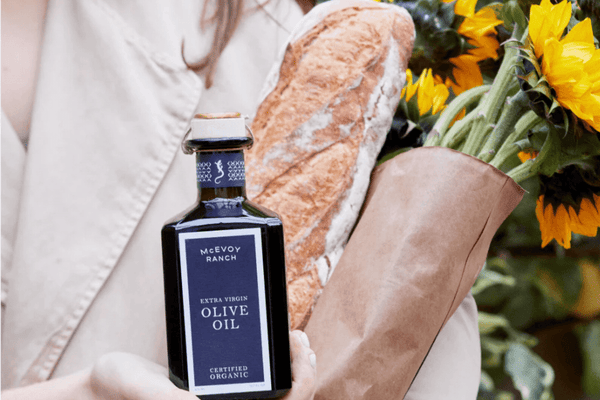
For a fresh, estate-grown extra virgin olive oil with a clear harvest date and a balanced, versatile profile, McEvoy Ranch Organic Extra Virgin Olive Oil is the flagship bottle to store well and use often.
Shop Organic Extra Virgin Olive OilDoes Bottle or Tin Size Affect Freshness?
Yes, because freshness and how often you use olive oil are connected. A smaller bottle or 200ml tin is easy to finish while the olive oil is at its best, which keeps you cooking with lively olive oil rather than nursing one large bottle for months. If you cook daily, a half-gallon or larger size can make sense, but decant from it and keep the main supply sealed. The best size is the one that matches your real cooking rhythm and lets you finish the olive oil before it can go rancid.
Frequently Asked Questions
How long does olive oil last once opened?
For the best flavor, use opened extra virgin olive oil within a few months of opening. Unopened and stored well, premium olive oil generally keeps its quality for a year or up to two years from the harvest date.
What is the best container for storing olive oil?
An opaque container kept away from light and heat. A tin offers complete light protection and durability; dark glass, a ceramic cruet, a stainless steel fusti, or a bag-in-box also works. Clear glass does not protect.
Does olive oil go bad, or does it just lose flavor?
Both, in a sense. It does not usually become unsafe, but it goes rancid: oxidation makes the flavor spoil and deteriorate until the olive oil tastes flat. Good storage slows that decline.
Is it bad to keep olive oil next to the stove?
Yes. The steady heat near a stove ages olive oil faster. Keep it in a nearby cupboard or cabinet instead, so it stays both handy and protected.
Can you use old olive oil?
Taste it first. If it smells and tastes fresh, it is fine to use; if it is rancid, the flavor will only diminish your food, so it is best replaced.
Key Takeaways
- Olive oil is perishable and does not improve with age; light, heat, and air are its worst enemies.
- It goes bad by turning rancid (oxidation, you can taste), not usually by becoming unsafe.
- Shelf life: a year or more unopened from the harvest date; within a couple of months of opening.
- Store olive oil in a cool, dark cupboard, in opaque packaging, tightly closed, and away from the stove.
- Most every day olive oil does not need the fridge.
- For bulk, use a stainless steel fusti or bag-in-box and decant into a smaller bottle or tin.
Good Olive Oil, Kept Well
Storing olive oil is not complicated, but it matters more than most people expect. Keep olive oil in a cool, dark place, protect it from light, heat, and air, begin with a fresh harvest date, and use it before it can go rancid. Treat olive oil like the fresh ingredient it is, and every bottle or tin will taste better for it.

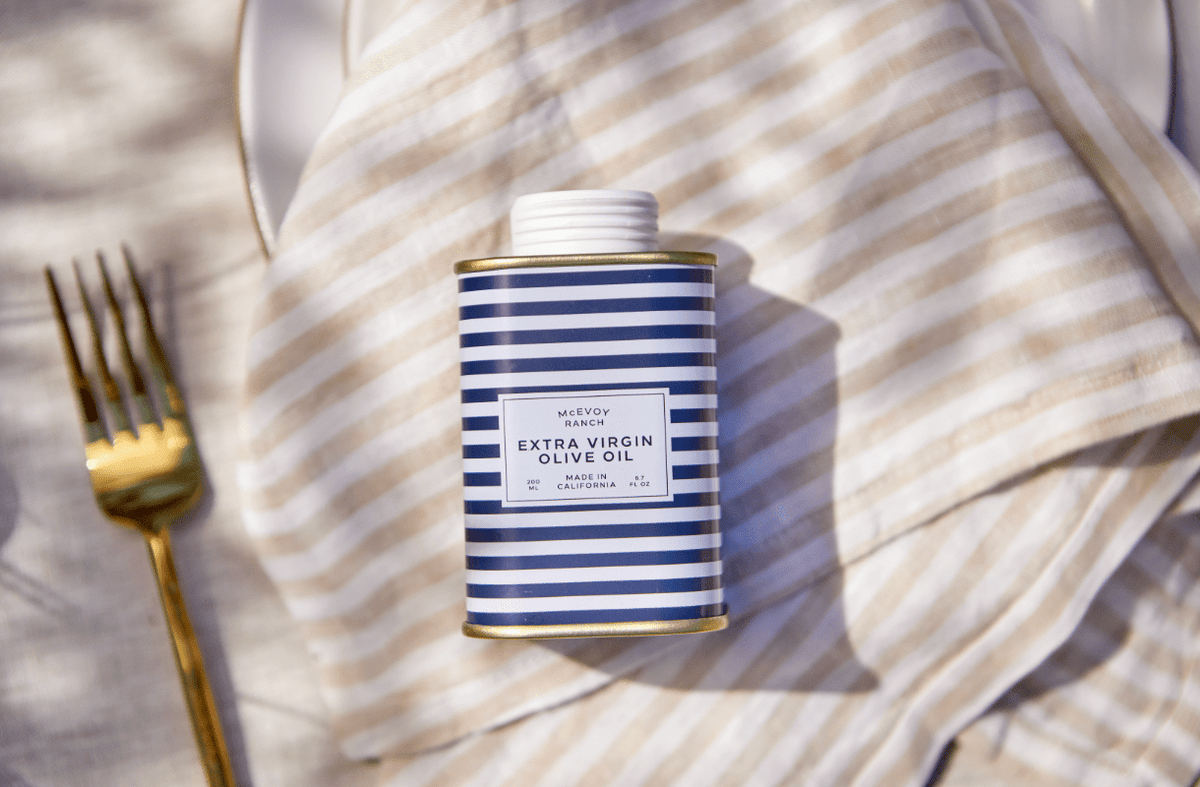
The Stripes Organic Extra Virgin Olive Oil tin is built around these storage principles: an opaque 200ml tin that protects estate-grown olive oil from light and air while staying easy to keep within reach.
Shop the Stripes Olive Oil tin