Olive oil, particularly extra virgin olive oil (EVOO), has been a key component of Mediterranean diets for centuries. Recently, it has gained popularity worldwide as part of daily wellness routines.
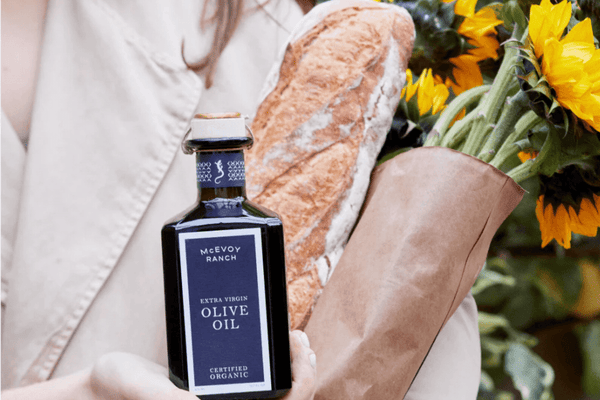
At McEvoy Ranch, the extra virgin oil that we produce on our 550-acre working farm in California is rich in monounsaturated fats and powerful antioxidants. Olive oil has been widely studied for its role in heart health and in the traditional Mediterranean diet.
In this article we will look at the specific benefits of drinking olive oil, and how you can incorporate it into your routine safely.
Key Tawkeaways:
- Extra virgin olive oil is rich in healthy monounsaturated fats.
- Olive oil contains antioxidants and polyphenols that have been widely studied by nutrition researchers.
- Consuming olive oil may support heart health, brain function, and overall wellness.
- Olive oil is the cornerstone of the healthy traditional Mediterranean diet.
Why Drink Olive Oil? An Overview of Its Benefits
Drinking olive oil is a simple and effective way to boost your intake of healthy fats and antioxidants. As a staple of the Mediterranean diet, olive oil is renowned for its health benefits.
Unlike other oils, extra virgin olive oil (EVOO) retains its natural nutrients, making it an ideal choice for enhancing your meals and supporting overall health.
Key Benefits of Dirnking Olive Oil
- Supports Digestion: Many people include olive oil in a fiber-rich, Mediterranean-style diet as part of supporting comfortable digestion.
- Promotes Satiety: Olive oil digests slowly, which may help you feel full longer between meals.
- Enhances Nutrient Absorption: Consuming olive oil aids in the absorption of fat-soluble vitamins (A, D, E, K), helping you get the most out of the foods you eat.
- Promotes Healthier Skin and Hair: The vitamins and antioxidants in olive oil nourish the skin and hair, promoting a radiant complexion and stronger hair.
- Rich in Polyphenols: Antioxidant polyphenols such as oleocanthal and hydroxytyrosol are among the most widely studied compounds in extra virgin olive oil.
Adding olive oil to your diet does more than enhance flavor; it’s a nod to a long tradition of using what many refer to as “nature’s gold” for health benefits. Remember, the quality of the olive oil is crucial to obtaining its full benefits; extra virgin olive oil has the best flavor and most nutritional benefits.
Top Health Benefits of Drinking Olive Oil
Incorporating olive oil into your daily diet can offer a range of health advantages:
1. Improves Digestive Health
Olive oil has long been enjoyed as part of fiber-rich, Mediterranean-style meals, and many people include it in their routines as part of supporting comfortable digestion. If you have ongoing digestive concerns, talk with a healthcare professional rather than relying on any single food.
2. Promotes Heart Health
Rich in monounsaturated fats, olive oil plays a crucial role in heart health. Some research has linked diets rich in monounsaturated fats and oleic acid with favorable low-density lipoprotein (LDL) and high-density lipoprotein (HDL) cholesterol levels, though these findings show association rather than cause. The British Heart Foundation has reviewed research on olive oil consumption and longevity.
Olive oil is a cornerstone of the Mediterranean diet, an eating pattern that cardiovascular researchers have studied for decades, including its associations with blood pressure and overall heart health. Olive oil is a food, not a treatment for any medical condition.
3. Supports Satiety and Weight Management
Contrary to common misconceptions about fats, olive oil can contribute positively to weight management. It digests slowly and promotes satiety, helping you feel full for longer periods.
This increased feeling of fullness can potentially lead to reduced overall calorie intake, supporting weight-management efforts. Additionally, the monounsaturated fats in olive oil are a well-studied part of Mediterranean-style eating patterns.
4. Contains Anti-Inflammatory Compounds
Olive oil contains compounds like oleocanthal, which is the subject of ongoing laboratory research into its anti-inflammatory properties. Olive oil is a food, not a substitute for any medication. Anti-inflammatory compounds in extra virgin olive oil, including polyphenols such as oleocanthal and hydroxytyrosol, continue to be widely studied by nutrition researchers.
5. Supports Skin and Hair Health
Rich in vitamins E and K, olive oil nourishes and moisturizes the skin and hair. Regular consumption can improve skin elasticity, reduce the signs of aging, and promote healthy, shiny hair.
A balanced diet that includes numerous vitamins and minerals is important for general health; BBC reporting estimates that 30% of the global population is deficient in vitamins and minerals necessary for well-rounded health.
|
Benefit |
Impact |
|
Digestive Health |
A traditional part of fiber-rich, Mediterranean-style meals |
|
Cardiovascular Health |
Widely studied for its role in heart health |
|
Weight Management |
Digests slowly, promotes satiety |
|
Anti-inflammatory |
Contains anti-inflammatory compounds under study |
|
Skin and Hair Health |
Nourishes with vitamins E and K |
Drinking Olive Oil: What Researchers Are Studying
Olive oil, consumed with food, has been the subject of extensive nutrition research. Olive oil is a food, not a treatment for any medical condition, but here is what researchers have been exploring:
Olive Oil and Cholesterol Research
Some research has linked olive oil consumption with HDL (good cholesterol) and blood lipid outcomes. These findings show association rather than cause, and olive oil is best enjoyed as part of an overall heart-healthy eating pattern.
A Satisfying, Slow-Digesting Fat
Because extra virgin olive oil is composed largely of monounsaturated fat, it digests slowly, which may help you feel full longer between meals. Nutrition researchers continue to study how olive oil and the broader Mediterranean diet fit into balanced eating patterns, and findings to date show association rather than cause.
Anti-Inflammatory Compounds and Joint Health Research
The anti-inflammatory compounds in extra virgin olive oil, including oleocanthal and hydroxytyrosol, are an active area of laboratory research. Olive oil is a food, not a treatment for any medical condition, and findings to date show association rather than cause.
|
Area of Research |
What Researchers Are Exploring |
|
Cholesterol |
Studied in relation to HDL cholesterol |
|
Satiety |
Digests slowly, which may help you feel full longer |
|
Anti-inflammatory compounds |
Oleocanthal under laboratory study |
Olive oil is a food, not a cure-all and not a treatment for any medical condition. Always consult a healthcare professional before making any changes to your diet or treatment plan. Olive oil is most effective when used as part of a healthy, balanced lifestyle.
Best Practices for Drinking Olive Oil to Maximize Benefits
To maximize the benefits of drinking olive oil, it's essential to know the correct amount and the best times to consume it.
How Much Olive Oil Should You Drink?
Finding the right daily intake of olive oil is crucial for reaping its benefits without overconsumption. The Mediterranean diet typically includes about 1/4 cup (60ml) of olive oil daily incorporated into meals. If you’re new to the practice of drinking olive oil, start with a smaller amount:
- Begin with 1 tablespoon daily.
- Gradually increase to 2-3 tablespoons as your body adjusts.
- Listen to your body and adjust the amount as needed.
Best Time to Drink Olive Oil for Health Benefits
The best time to drink olive oil can depend on your personal health goals:
|
Time of Day |
Potential Benefits |
|
Morning (empty stomach) |
A traditional start to the day for many |
|
Before meals |
Can help control appetite |
|
Evening |
A calming way to end the day |
Choose a time that fits your routine and digestion. Overall intake is more important than the specific time for enjoying the health benefits of olive oil.
Types of Olive Oil: Which Offers the Most Benefits When Drunk?
Not all olive oils are created equal when it comes to health benefits. The quality of the oil significantly impacts its nutritional value and health effects.
Extra Virgin Olive Oil vs. Regular Olive Oil
- Extra virgin olive oil (EVOO) is the healthiest choice especially organic varieties such as those from McEvoy Ranch. It is cold extracted and so it retains the most nutrients, antioxidants, and beneficial compounds.
- Extra virgin olive oil is by definition cold extracted or cold processed. The cold-extraction process keeps temperatures low, preserving essential compounds like polyphenols and vitamins. In contrast, refined olive oil undergoes heat and chemical processing, which diminishes its natural health benefits.
- Regular olive oil, a blend of refined and virgin oils, offers fewer health benefits due to its lower nutrient content.
Cold-Processed vs. Refined Olive Oil
Cold-pressed olive oil retains more nutrients than refined varieties. The cold-processed process keeps temperatures low, preserving essential compounds like polyphenols and vitamins. In contrast, refined olive oil undergoes heat and chemical processing, which diminishes its natural health benefits.
|
Olive Oil Type |
Production Method |
Nutrient Retention |
Best for Drinking |
|
Extra Virgin Olive Oil |
Cold-processed |
High |
Yes |
|
Virgin Olive Oil |
Cold-processed |
High |
Yes |
|
Refined Olive Oil |
Heat/chemical processed |
Low |
No |
For maximum health benefits, choose high-quality extra virgin olive oil rich in antioxidants and bioactive compounds.
Common Myths About Drinking Olive Oil for Health
While olive oil is celebrated for its health benefits, some myths surrounding olive oil persits such as it not being suitable for cooking. here are the facts to help you mkae informed choices:
Myth 1: Drinking Olive Oil Alone Can Replace Medical Care
While olive oil offers several health benefits, it is not a cure-all. It should be part of a balanced diet and healthy lifestyle that supports heart health and overall wellness. Olive oil cannot replace medical treatments.
Myth 2: More Olive Oil Means More Benefits
Excessive consumption of olive oil does not necessarily enhance its benefits and may lead to unwanted weight gain due to its high calorie content. Stick to the recommended daily amount using it to replace other fats to enjoy its benefits without adverse effects.
|
Olive Oil Myth |
Reality |
Balanced Approach |
|
Replaces medical care |
Supports overall wellness; it is not a cure-all |
Include in a balanced diet with medical care |
|
More is always better |
Excess can cause weight gain |
Follow recommended daily intake |
Final Thoughts: The Health Benefits of Olive Oil
Drinking olive oil can offer numerous potential benefits, from supporting heart health and digestion to nourishing skin and hair with vitamins E and K. As a staple of the Mediterranean diet, olive oil is rich in nutrients that promote overall wellness.
For the best results, choose high-quality extra virgin olive oil, which retains the most antioxidants and bioactive compounds. Incorporate it into your daily routine in moderation and as part of a balanced diet and healthy lifestyle. With regular use, this ancient tradition could become a key component of your wellness routine.
FAQs
What are the health benefits of drinking olive oil?
Consuming olive oil, particularly extra virgin olive oil, is associated with numerous health benefits. This healthy fat is rich in polyphenols and oleic acid, which contribute to its anti-inflammatory properties.
Some research has linked regular olive oil consumption with heart health, digestion, and cholesterol levels, though these findings show association rather than cause. Additionally, olive oil digests slowly, which may help you feel full longer.
How much olive oil should I drink daily?
The recommended daily intake of extra virgin olive oil varies, but generally, consuming about one to two tablespoons—either straight up or with food— is considered beneficial for most individuals. This amount allows you to enjoy the health benefits of olive oil without exceeding caloric needs. However, it’s essential to consider your overall diet and consult with a healthcare professional if you have specific health concerns.
Is it better to drink olive oil on an empty stomach?
Many people find that taking a shot of extra virgin olive oil on an empty stomach can stimulate the digestive tract, providing a good start to your day. However, individual tolerances vary, and some may experience digestive discomfort, so it’s best to listen to your body.
What are the anti-inflammatory benefits of olive oil?
Olive oil is well-known for its anti-inflammatory properties, largely attributed to compounds like oleocanthal. This compound is the subject of ongoing laboratory research into its anti-inflammatory properties. Olive oil is a food, not a substitute for any medication.
Anti-inflammatory compounds in olive oil, including its polyphenols, have been widely studied by nutrition researchers. Incorporating olive oil into your diet is a flavorful way to embrace a Mediterranean-style eating pattern.