In this guide:
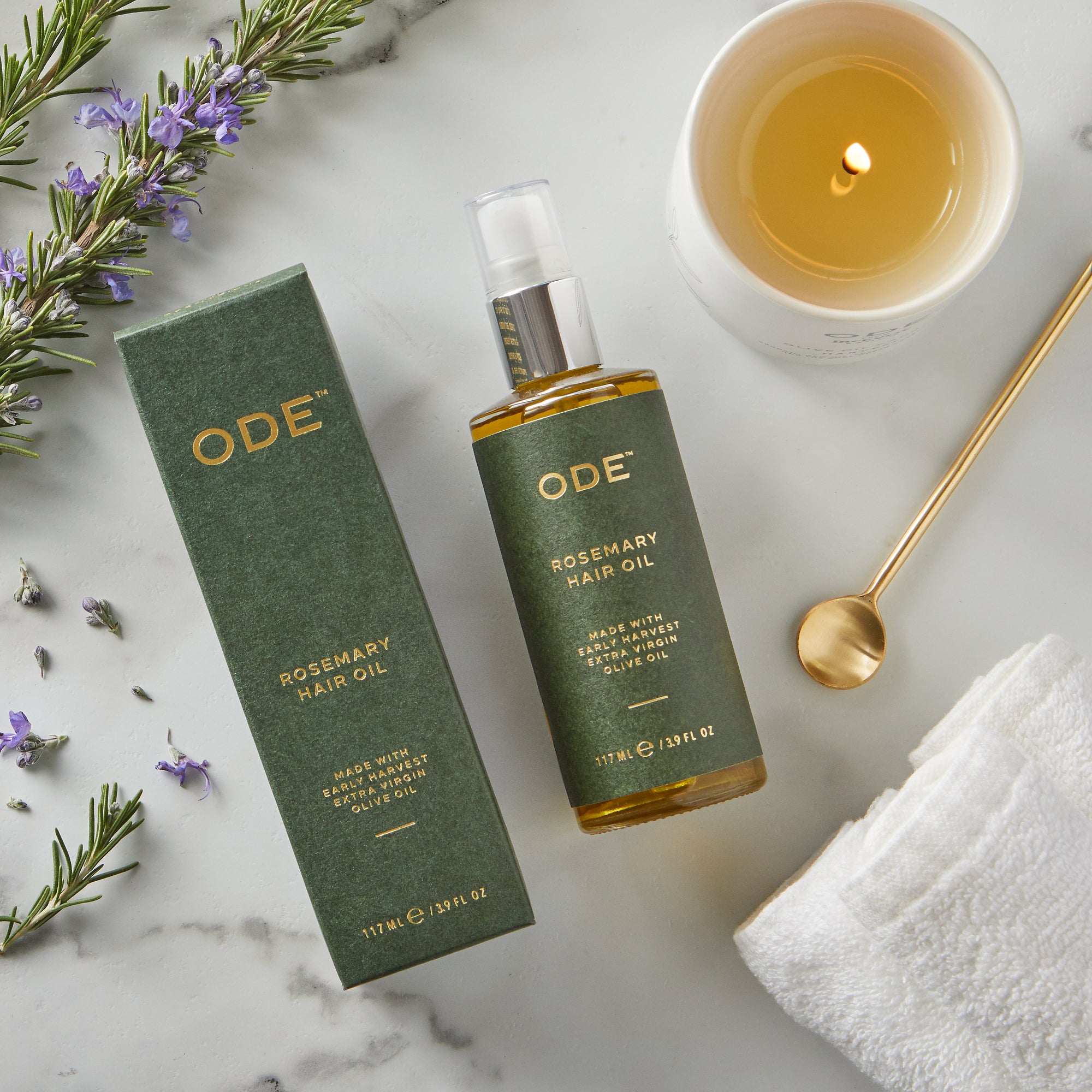
Rosemary Hair Oil — a lightweight, olive-oil-forward option for everyday nourishment—especially when you want a more controlled alternative to occasional DIY oil masks.
Shop Rosemary Hair OilWhy olive oil hair masks work (and what they can't do)
Hair masks are at their best when they solve a specific problem: rough texture, stubborn dryness, or that "tangles if you look at it wrong" feeling. An oil-based mask with olive oil works by coating the hair shaft with an emollient layer that adds slip and helps reduce friction. That's why hair can feel calmer and more manageable after an oil mask—especially when you've got dry hair or styling wear-and-tear.
Here's the honest part: an oil mask won't repair damaged hair in a medical sense. What it can do is help hair look and feel smoother, which often means less snagging and less breakage. Think of it as comfort and polish: softness, shine, and fewer bad-hair-day battles—rather than a miracle cure. When olive oil has been used for beauty routines across Mediterranean cultures, it's largely because it's practical: rich, protective, and easy to use.
Benefits of olive oil for dry, frizzy hair and split ends
The benefits of olive oil in hair care come down to texture and protection. Olive oil is made of fatty acids that behave like a smoothing layer on the outside of hair. That can help hydrate the feel of hair (even though oils don't add water), and it can help seal in the moisture already present—especially at the ends of the hair.
If your main issue is frizzy hair, an oil mask can reduce that "puffy" look by helping the cuticle lie flatter. If your issue is split ends, the goal is cosmetic: an oil mask won't fuse split ends back together, but it can reduce roughness and help hair feel less scratchy. The best outcome is shiny hair that looks more polished and feels softer, even when your week has been… a lot.
Which olive oil to use for a hair mask (and why extra virgin matters)

Organic Extra Virgin Olive Oil — a kitchen staple best known for its quality and freshness, and a classic example of organic extra virgin olive oil when you're choosing an oil by quality and freshness.
Shop Organic EVOOWhen you're making a mask with olive, quality matters more than marketing. In general, extra virgin olive oil is the least processed style and tends to have a richer feel—so it's often chosen for an oil mask. Olive oil naturally contains compounds like vitamin e and squalene, which is one reason it can feel so comfortable as a smoothing, protective oil.
How to apply an olive oil hair mask without greasy buildup
This is where most "olive oil hair mask" attempts go wrong: using too much oil, applying it too close to the scalp, then wondering why it won't wash out. The fix is simple: start with a tiny amount, apply strategically, and rinse with a plan. You'll get the benefits without the heavy finish.
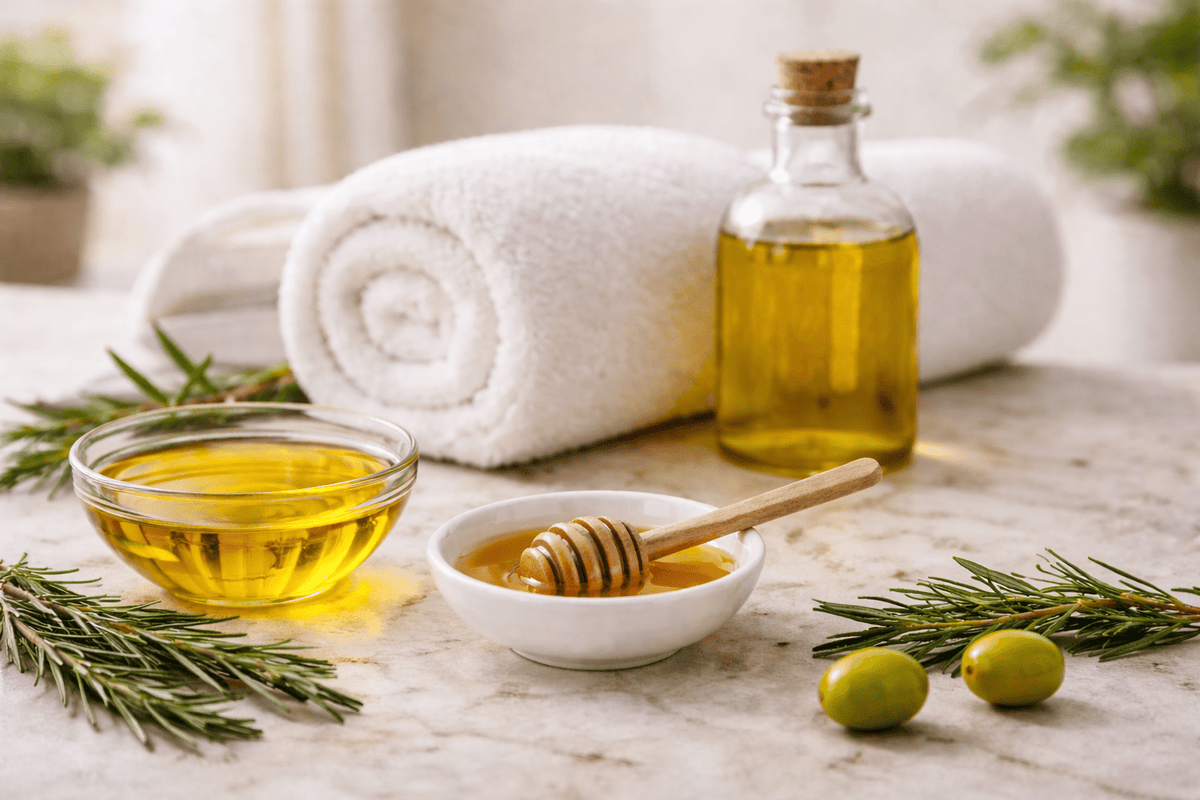
Here's a clean method that works for most people: pour the oil in a bowl (oil in a bowl), measure 2 tablespoons (or less for fine hair), and warm it slightly by setting the bowl in warm water. Then work with your hair in sections (hair in sections), smoothing from mid-length to root to tip—but keep the roots lighter unless you specifically want scalp nourishment. The goal is to mask evenly (mask evenly), not saturate.
DIY recipes: three olive oil hair masks you can actually rinse out
You don't need ten ingredients. The best DIY recipes are simple, rinse cleanly, and match what your hair actually needs. Below are three options you can rotate as needed. This section is your "save it, reuse it" playbook. When you're using olive oil in a hair mask, many people prefer extra virgin olive oil for its richer feel and minimal processing.
1) The classic: olive oil + time (simple oil mask)
This is the simplest oil mask, and it's often the most effective. Use olive oil—often extra virgin olive oil—alone when your hair feels rough but you don't want a complicated kitchen project. Warm a small amount between your palms and massage the oil into mid-lengths and ends. Then wrap your hair up and place hair under a shower cap (hair under a shower cap) so the mask doesn't drip everywhere.
Let sit (let sit) 15–30 minutes. If you want to mask deeply (mask deeply), go closer to 30 minutes, then rinse and shampoo thoroughly. The goal is extra moisture (extra moisture) and slip—not a heavy coating. For many people, this is the easiest way to make hair feel more luscious without overthinking it.
2) Softness booster: honey and olive oil (for dry ends)
If your ends feel brittle, honey and olive oil can be a nice pairing. Honey is sticky, so keep it small: 1 teaspoon honey + 1 tablespoon olive oil (adjust as needed). Apply only from mid-length to ends. Comb through gently, then cover with a shower cap.
Important: rinse this one well before shampooing so you don't trap honey in the hair. Allow the mask to sit (allow the mask to sit) 15–20 minutes, then rinse and use a gentle shampoo (gentle shampoo). This is a "softness and shine" mask, not a scalp mask.
3) The rich DIY: avocado + olive oil deep conditioning
If you want a richer feel, mash 2 tablespoons avocado with 1 tablespoon olive oil until smooth. This is an olive oil deep comfort mask for times when hair feels especially rough—like after a lot of heat styling or sun exposure. Keep it off the scalp unless your scalp is dry and comfortable with oils.
Apply, cover, and leave the mask (leave the mask) 20 minutes. Then rinse thoroughly and shampoo. If you've recently used bleach or your hair feels fragile, keep masks gentle and avoid heavy pulling or aggressive detangling while the hair is wet.
Best olive oil hair mask by hair types: fine, oily, curly, and damaged
Your results depend on hair type more than the recipe. The same mask that makes curly hair feel luxurious can flatten fine hair. So instead of chasing "the best," choose the mask that matches your hair's behavior. This is where a little strategy makes olive oil feel like a smart upgrade—not a gamble.
Fine hair: use less than 1 tablespoon; apply only to ends; keep time short (10–15 minutes). Oily hair: keep the scalp mostly oil-free; focus mid-lengths and ends; rinse first, then shampoo. Curly hair: a little more oil can work; focus on frizz control and definition; avoid heavy buildup at roots. Damaged hair: keep it gentle; use an oil mask as a pre-shampoo softener, then condition lightly after washing.
The goal across all types of hair (types of hair) is the same: nourish without overload. Used with intention, oil masks can support healthy hair by reducing friction and helping prevent breakage (prevent breakage) during styling. That's how you improve the health (improve the health) and the feel of hair over time.
Scalp rules: when to include the scalp (and when to skip it)
Not every mask belongs on the scalp. If your scalp is dry and comfortable with oil, a light massage can feel soothing. But if you're prone to buildup, irritation, or you wash infrequently, applying heavy oil at the roots can feel greasy fast. In short: treat the scalp gently and keep the oil controlled.
If you do include the scalp, keep it minimal: add a few drops (add a few drops), then massage the oil lightly—no scratching. This is about comfort and nourishment, not forcing hair growth. Most people get the biggest benefit by focusing on hair and scalp (hair and scalp) separately: scalp gets light care, ends get richer care.
Pre-shampoo vs. overnight: how long to leave the mask
Most people do best with a pre-shampoo oil mask. Apply to dry hair, let it sit 15–30 minutes, then wash. This is the sweet spot where you get slip and softness without the "why is my hair still oily tomorrow?" effect. If you're building a routine, start here and keep it simple: mask once a week (mask once a week) when hair feels dry or rough.
Overnight masks can work, but they're not required—and they're easier to overdo. If you go overnight, use less oil and keep it mostly on ends. Put hair under a shower cap (hair under a shower cap) or protect your pillowcase. A good rule: if you're new to using olive oil for hair (using olive oil for hair), skip overnight until you know how your hair rinses.
Shampoo + rinse strategy: the "clean but soft" finish
Your rinse matters as much as the mask. If your hair feels coated afterward, it's usually one of three things: too much oil, too much time, or not enough shampoo. Start with a thorough rinse, then shampoo twice if needed. Using a gentle shampoo is often the best balance: it cleans without leaving hair stripped.
Here's a simple approach that works: rinse with warm water, then apply shampoo to the scalp first and work the lather down. If you used a richer mask, do a second shampoo. Then condition lightly (especially on ends). The goal is moisture and shine (moisture and shine) without residue—clean hair that still feels soft.
When to choose a formulated olive oil hair treatment instead
DIY masks are great—until they're not. If you love the idea of olive oil but don't love the trial-and-error, a formulated product can be a more consistent way to get results. A good formula is designed to spread evenly, rinse more predictably, and fit into a regular hair care routine without the "oops, too much" moment.
This is where a purpose-built option like Rosemary Hair Oil can be a smart move. It brings the comfort of olive oil into a controlled blend—use olive oil in a way that feels intentional, not heavy. If your hair needs a reset but your schedule is busy, a lightweight oil treatment can be the easiest way to nourish your hair and keep things consistent. (And yes: a little goes a long way.)
If you want a subtle spa moment, you can add one essential oil drop to your DIY mask—just be cautious with sensitive scalps. And if you like the ritual, keep it simple: one oil mask + good shampoo habits + gentle handling is enough to support the overall health of your hair. Olive oil may not be magic, but it's reliably useful when you use it well.
Key takeaways
- An olive oil hair mask helps most with softness, slip, and a calmer finish—especially on dry ends and frizz.
- Extra virgin olive oil is often chosen for hair masks because of its richer texture and minimal processing.
- Start small: the right tablespoon amount depends on your hair type (fine hair needs less; curly hair can handle more).
- Use a shower cap and time-box the mask (15–30 minutes) for the easiest rinse-out.
- For oily scalps, keep oil off the roots and focus on mid-lengths and ends.
- A good rinse + shampoo plan is what makes hair feel clean but soft afterward.
- If DIY feels unpredictable, a formulated option like Rosemary Hair Oil can deliver more consistent results.
If you're building a simple beauty routine, treat hair masks like a tool—not a lifestyle. Use them when hair feels dry, frizzy, or rough, and keep the ritual repeatable. The best mask is the one you'll actually do.
Featured Products Mentioned in This Guide
Explore the McEvoy Ranch essentials referenced throughout this article:
Want the benefits without the DIY?
Our ODE collection brings McEvoy olive oil into skin and hair care, made on the same certified organic ranch as our oil.
Explore ODE skin & hair care